 Explore blog articles


8 October 2026 – vivla
Buying a Home on Cádiz's Costa de la Luz: Tarifa to Conil
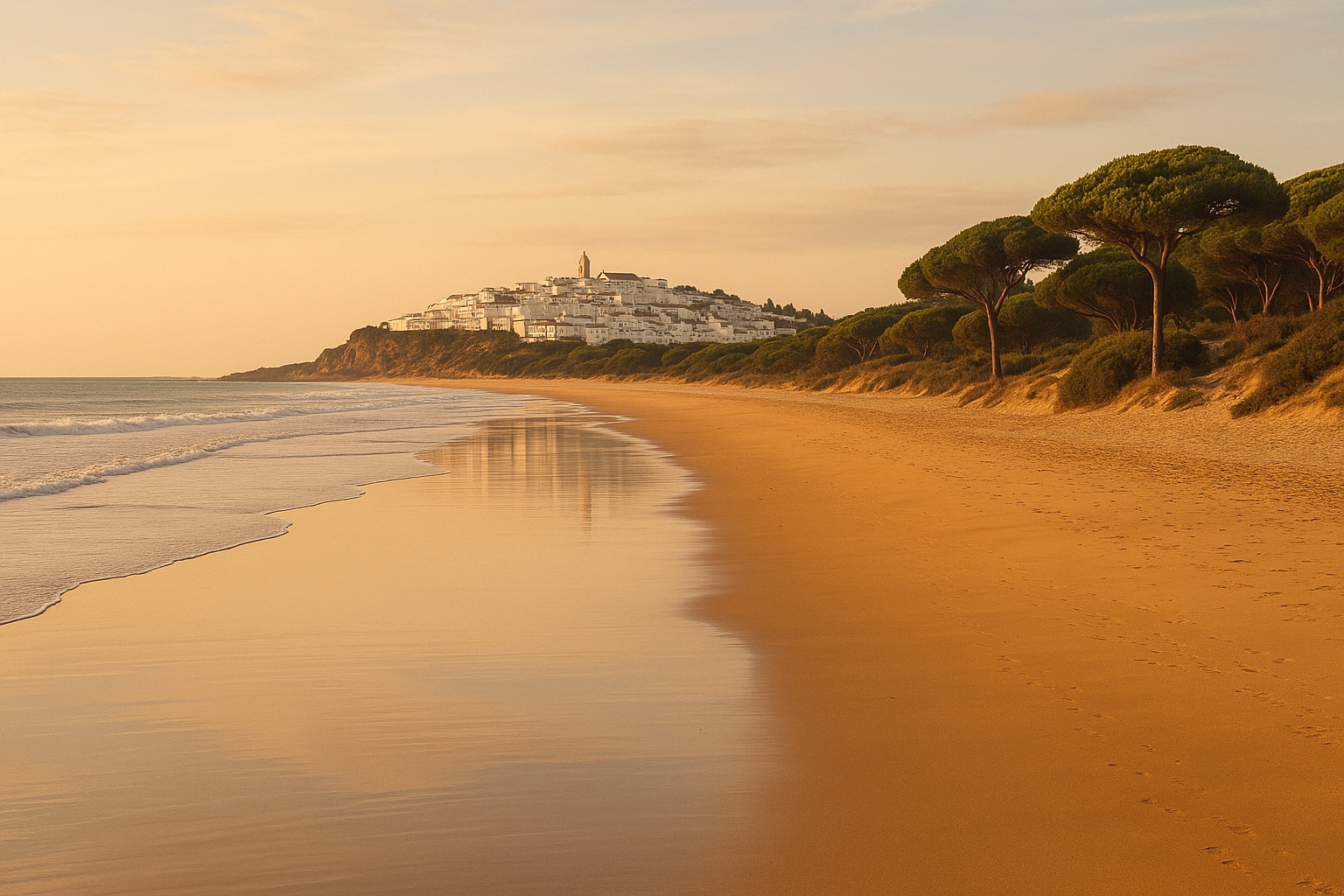
To buy a home on Cádiz's Costa de la Luz, you first have to choose a town, because almost everything changes from one to the next. Tarifa is wind and sport. Zahara is the long summer beach. Conil is the town with residents all year round, Roche is pine woods and coves with detached houses, and Vejer looks out to sea from a hilltop. The water is the Atlantic's: cool and tidal. And the levante, the strong easterly wind, blows through all of them.
Which Costa de la Luz town suits you?
It depends on how you want to spend your days, and the budget comes afterwards. If you wake up checking the wind forecast, Tarifa. If the first thing you want is to walk down to the beach with the children, Zahara or Conil. If you want coves and don't mind the car, Roche. If you would rather have a shady square and drive to the sea, Vejer. From south to north, this is how the coast divides up:
- Tarifa: the beaches of Los Lances and Valdevaqueros, open to the wind almost all year. For people who kitesurf or windsurf, or who accept it as part of the deal.
- Bolonia: a hamlet belonging to Tarifa inside the Parque Natural del Estrecho, with a beach that has no apartment blocks around it.
- Zahara de los Atunes: part of Barbate, a small fishing village with a beach that runs all the way to Atlanterra.
- Barbate: fishing port and almadraba. A working town, with life in January.
- Los Caños de Meca: coves beneath the cliffs of La Breña and the Trafalgar lighthouse.
- El Palmar: a long, straight beach belonging to Vejer, with low houses scattered across the countryside.
- Conil: the largest town on this stretch, with its old quarter right up against Los Bateles beach.
- Roche: a residential estate in Conil, set between pine woods and clifftop coves.
- Vejer: a white town up on a hill, about nine kilometres as the crow flies from El Palmar.
Further north lie Chiclana, with La Barrosa and Sancti Petri, and Sanlúcar, facing Doñana. They work on another scale. Chiclana is almost a city. In January, that is an advantage.
Tarifa and Bolonia: the wind and the dune
In Tarifa the levante is in charge. It blows through the Strait on about 165 days a year, according to a study by the former Instituto Nacional de Meteorología archived by AEMET, and from May to August it turns up on half of all days. For kitesurfers, that is exactly what they come for. For lunch on a terrace, it is a nuisance. Life here faces the water. In the morning you check the forecast and choose your beach: Los Lances, right by the town, or Valdevaqueros, further west. In the house, the wind shows in the design. A patio or porch sheltered from the east gets used on far more days than a terrace open on that side, and it is worth checking before you fall for the sea views from the sitting room.
The ferry to Tangier leaves from the port and takes around an hour, according to Baleària. Lunch in Morocco and back to sleep in your own bed makes a good Saturday.
Bolonia belongs to the same municipality, but it feels like somewhere else. The beach lies at the foot of the Roman ruins of Baelo Claudia. There are hardly any houses. People come here for the day.
To the west rises the dune, about 30 metres high according to the Junta de Andalucía, which declared it a natural monument.
Zahara and Atlanterra: the tuna village
Zahara de los Atunes is a small fishing village that carries its catch in its name. The almadraba, the method of fishing bluefin tuna with fixed nets, is still set off this coast every spring. In May the village holds its tuna route, with bars serving tapas of almadraba tuna and a public ronqueo, the butchering of the fish by knife, according to Andalucía Turismo. Barbate, Conil and Tarifa do the same between May and June.
You get around on foot. Buyers here look at flats and penthouses a few minutes from a wide beach, good for walking at low tide. To the south, the same beach carries on to Atlanterra: terraced houses and homes facing the sea. Almost everyone counts it as Zahara, but it actually falls within the municipality of Tarifa, according to the Diputación de Cádiz. It is the most summer-oriented area. In November the pace drops sharply, and Atlanterra relies on the village for almost everything.
Zahara is also the most expensive area: 4,585 €/m² in September 2026, according to idealista.
Barbate lies to the north. From there the clifftop path sets off towards Los Caños de Meca, through the Parque Natural de La Breña. Halfway along stands the Torre del Tajo, perched over a rock face about 100 metres above the sea, according to the Junta de Andalucía. It is the walk you save for when friends come to stay. Los Caños are waiting at the end. They suit people who put the landscape before amenities: coves and pine woods, with the Trafalgar lighthouse in the background and very few people out of season.
Conil, Roche and Vejer: the stretch with life all year
Conil is the town on this coast that never switches off. It has 24,102 inhabitants, according to the INE municipal register for 2025, and you notice it in winter: the usual bars and shops stay open. The old quarter, with its white streets around the Torre de Guzmán, runs down to Los Bateles beach. You leave the house in flip-flops and five minutes later you are on the sand. For a family that comes at Easter, in summer and on the odd autumn long weekend, and doesn't want to depend on the car for bread or the afternoon ice cream, it is the easiest choice.
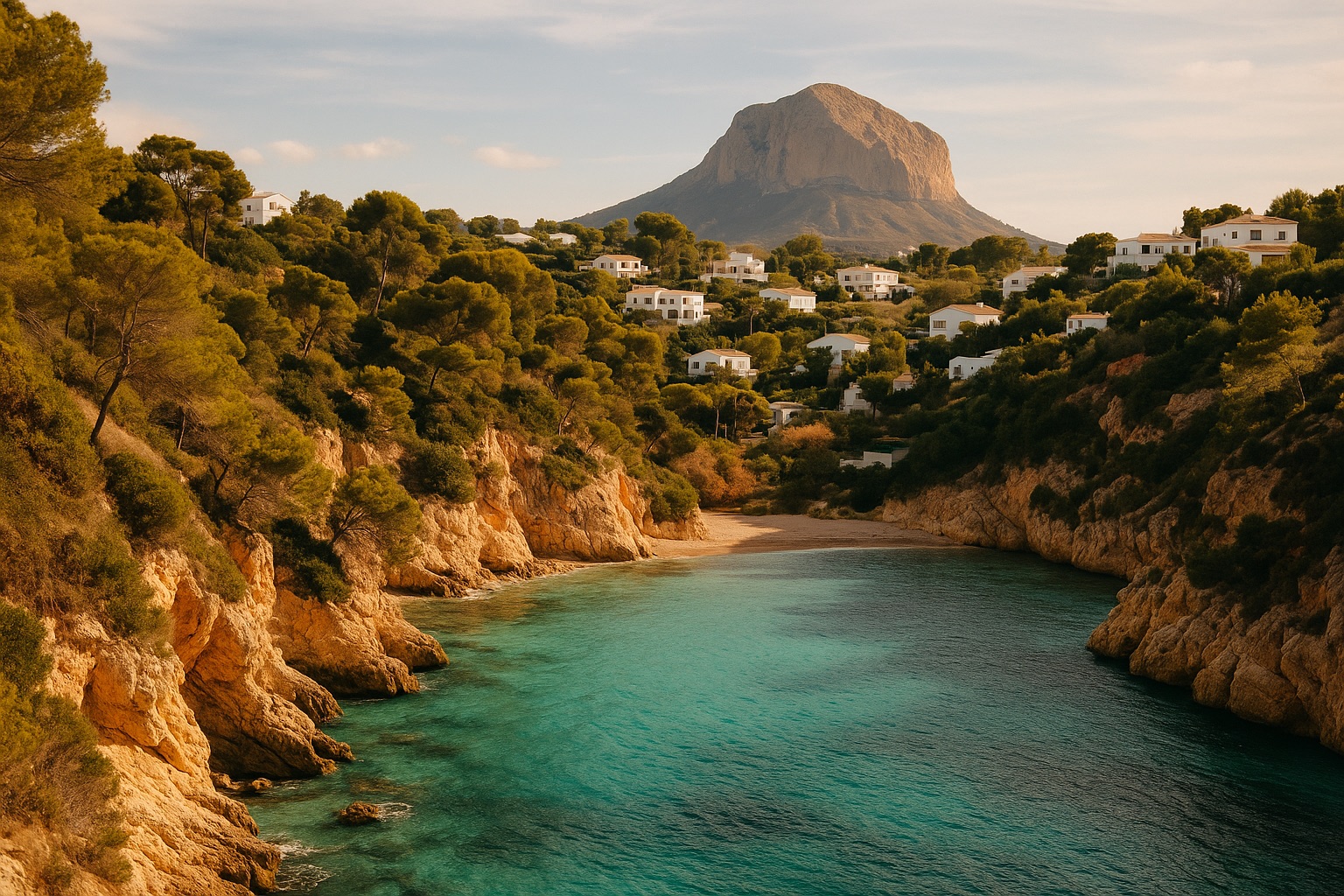
Roche is a different matter. It lies about ten kilometres from the centre of Conil, among pine woods and a string of small coves beneath the cliffs. Cala del Faro and Cala del Pato are reached by steps that Costas, the Spanish coastal authority, built in 1993 to deal with drops of more than ten metres, according to the Ministerio para la Transición Ecológica. At high tide, some of them disappear. There are no beach bars. The typical house is detached, with its own plot and private pool. Life looks inwards. Even for bread you need the car.
Vejer is the town for people who prefer the square to the beach. It sits on top of a hill, with patio houses and flat roof terraces in the old quarter, and it is the cheapest place on this stretch: 2,284 €/m², according to the same idealista report.
The nearest beach is El Palmar, by car, where a wave fills the water with surfers in autumn and winter.
Getting to the house
Most people reach the Costa de la Luz by car from Jerez airport. Conil is 70 kilometres away, a little over an hour without traffic, and Zahara about 102 (an hour and a half), according to calculations on OpenStreetMap. Seville is a good two hours away.
From Madrid, the A-48 motorway ends at Vejer, and from there you continue along the N-340 towards Zahara and Tarifa.
VIVLA homes on the Costa de la Luz
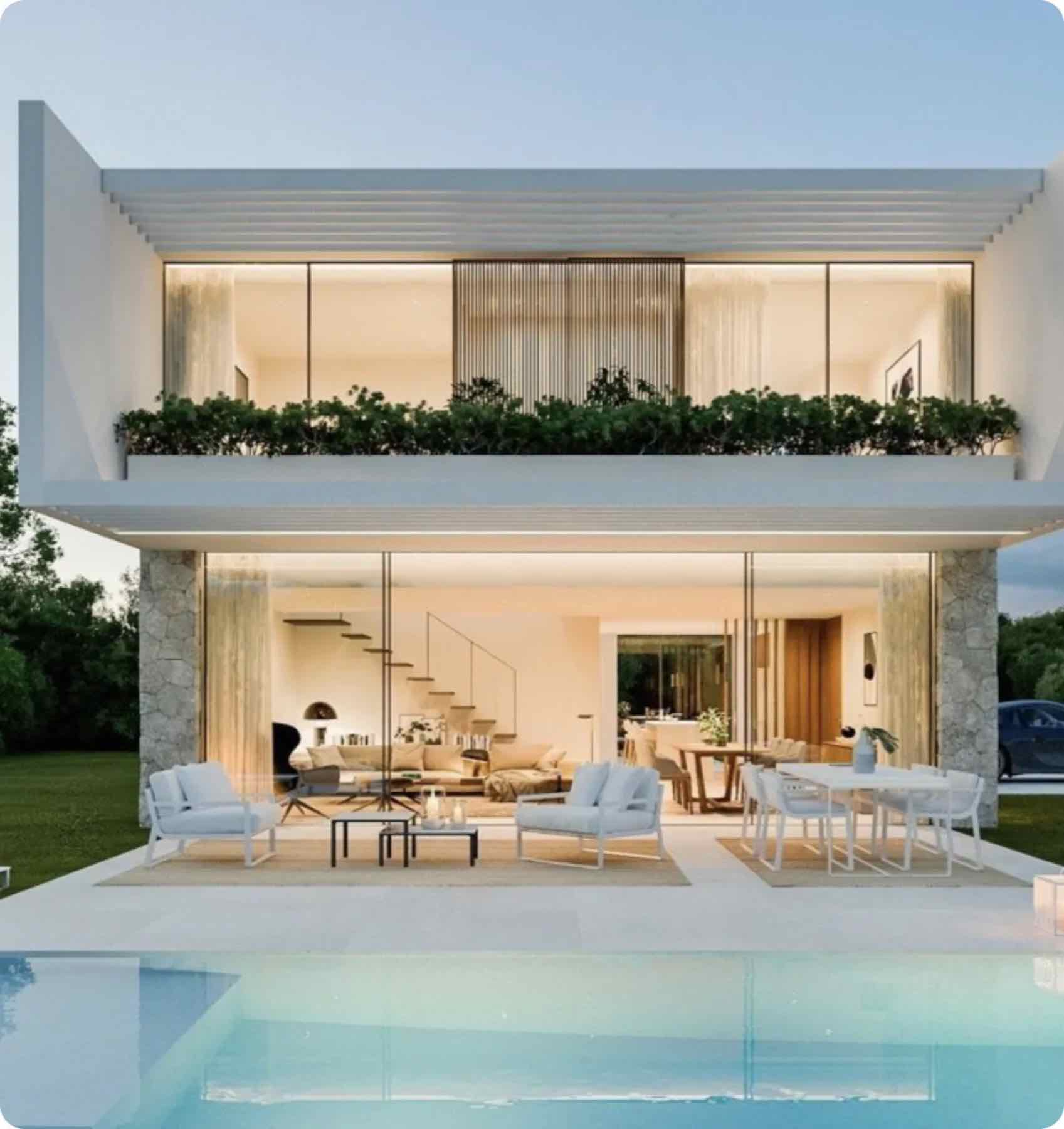
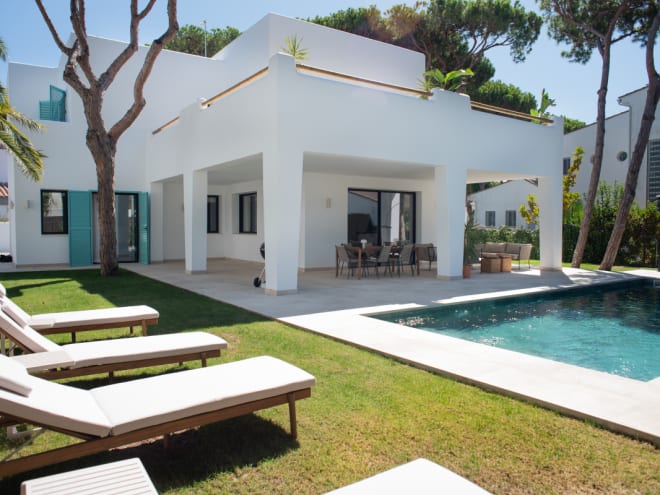
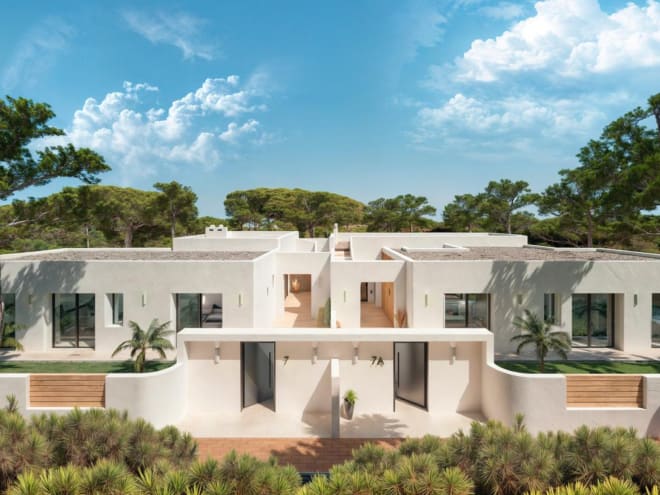
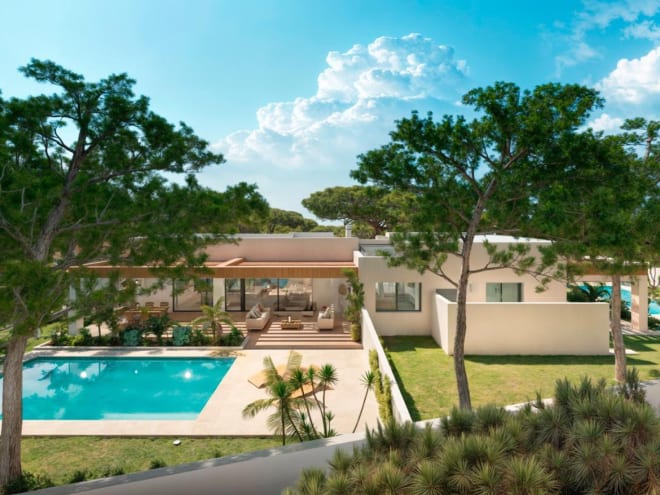
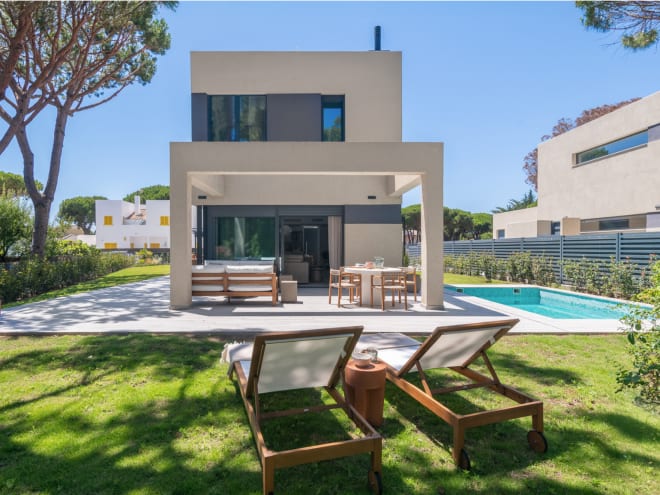
VIVLA has eight homes on the Costa de la Luz, according to its public listings as of 19 October 2026. Five are in Roche. Casa Nara and Casa Gades are four-bedroom villas with private pools. Casa Mareta and Casa Solera, single-storey semi-detached houses, also have four. Casa Sidonia is detached, with four en-suite bedrooms. The other three look towards Zahara. Casa Tuna is a five-bedroom terraced house facing Atlanterra beach. Casa Salina, a four-bedroom duplex, is in Atlanterra. Casa Alba is a three-bedroom penthouse in Zahara village. The first six are sold out. In October 2026, shares are on sale in Salina, at 195,000 € for a 1/8 share, and in Alba, at 145,000 €. Neither is finished yet. Salina is listed as under construction, and handover of Alba is estimated for the first quarter of 2029.
Each share comes with a title deed and six weeks a year in the house. How co-ownership works is explained in this guide, and you can see all the homes on the Costa de la Luz page.
VIVLA on the Costa de la Luz
Cádiz, co-owned.
Real homes in Roche, Zahara and Atlanterra, with title deeds. Every share is one eighth and carries six weeks a year.
→ Swipe to explore
 Being renovated
Atlanterra · Zahara
Casa Salina
195.000 € · 1/8 share
View home→
 Under construction
Zahara de los Atunes
Casa Alba
145.000 € · 1/8 share
View home→
 Sold out
Roche · Conil
Casa Sidonia
Waiting list
View home→
 Sold out
Roche · Conil
Casa Mareta
Waiting list
View home→
 Sold out
Roche · Conil
Casa Gades
Waiting list
View home→
 Sold out
Roche · Conil
Casa Solera
Waiting list
View home→
 Sold out
Roche · Conil
Casa Nara
Waiting list
View home→
 Sold out
Atlanterra · Zahara
Casa Tuna
Waiting list
View home→
Shares shown are 1/8, each with 6 weeks a year. Prices and status as published on each home page on 21 October 2026 and subject to change; check the listing for current availability.
Frequently asked questions
Which Costa de la Luz town has life in winter?
Conil. With 24,102 inhabitants (INE, 2025), it keeps its shops and bars open once summer ends, and its old quarter reaches right down to the beach. Barbate and Chiclana also have residents all year round. The estates, such as Roche or Atlanterra, depend on the nearest town, and Zahara and Tarifa slow down considerably from November onwards.
Zahara or Conil?
Zahara, if the house is mainly for summer and you want a small village and a long beach. Conil, if you plan to go several times a year and want services close at hand. Zahara is more expensive: 4,585 €/m² according to idealista in September 2026. Conil has more life out of season, although it fills up in August too.
How much does a house in Zahara de los Atunes cost?
Around 4,585 €/m² on average, according to idealista in September 2026, the highest price on the Costa de la Luz. Vejer, at 2,284 €/m², is the cheapest on this stretch. Through co-ownership, a 1/8 share of Casa Alba, a penthouse in Zahara village, costs 145,000 €, with handover expected in 2029.
Is the levante a real nuisance in Tarifa?
In summer, quite a lot. It blows on about 165 days a year in the Strait, and from May to August it turns up on half of all days, sometimes for a whole week (Instituto Nacional de Meteorología). For kitesurfing it is an advantage. For everyday life, look for a house with a patio or porch sheltered from the east, or look further north, in Conil or Roche.
vivla co-ownership
Real ownership, a fraction of the cost
VIVLA offers managed co-ownership of luxury second homes across Spain — Mallorca, Ibiza, Menorca, Baqueira and many more. You own a registered share with a real title deed, not a use right, and VIVLA handles the purchase, the legal structure and year-round maintenance. It's the rational choice when you'll use the house a few weeks a year rather than the whole season.