 Explore blog articles


14 October 2026 – vivla
Buying a Home in Asturias: Coastal Villages, Prices and Season
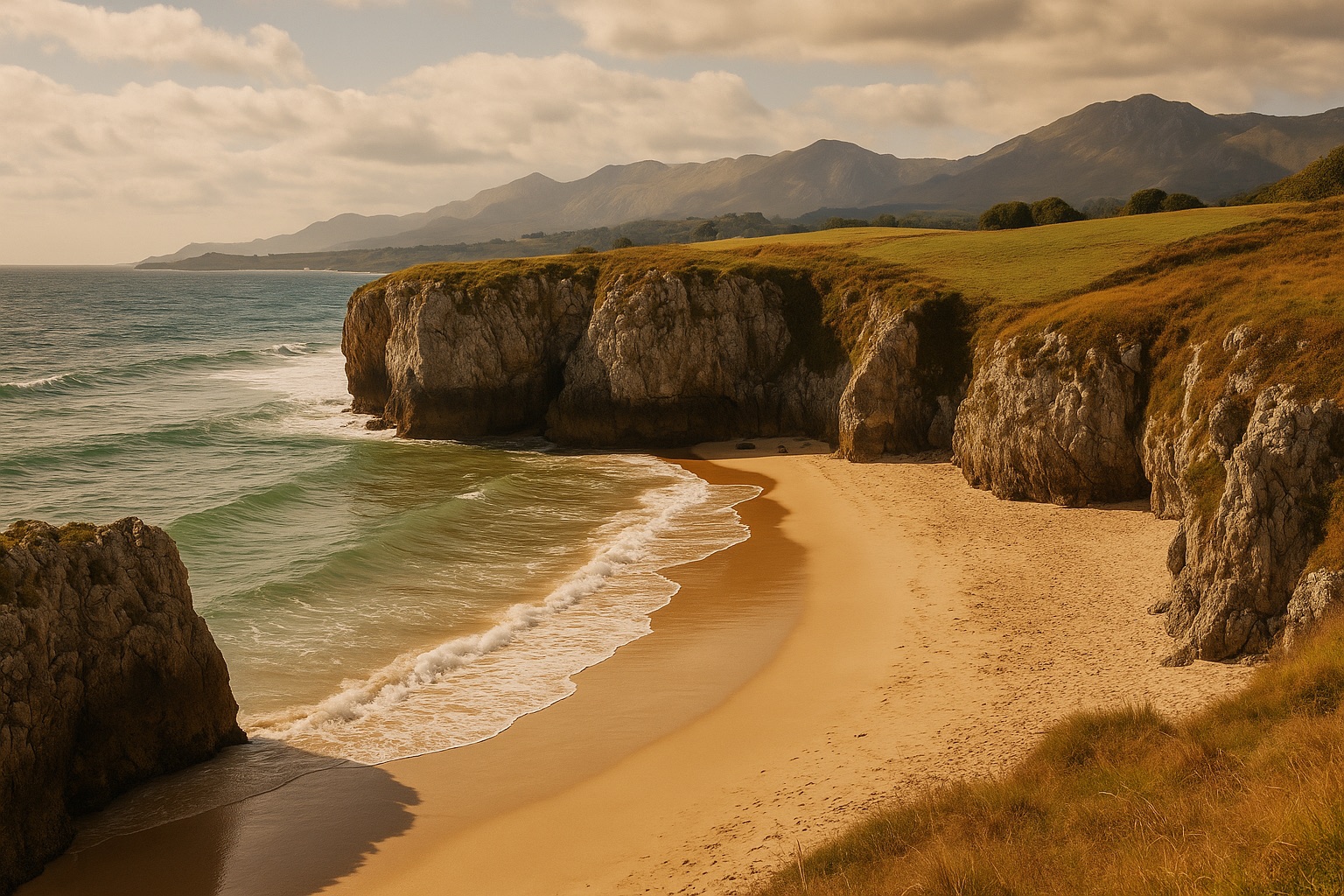
If you're buying a home in Asturias for summers and long weekends, start in the east. The municipality of Llanes gives you small beaches tucked between cliffs, with the gateway to the Picos de Europa about 40 minutes away. The A-8 runs right across it. It rains, and quite a lot. That's why it pays to choose the house with October in mind as much as August.
East, centre or west: three different coastlines
The Asturian coast runs east to west along the Cantabrian motorway, and on the way it changes character three times.
The east runs from Cantabria to Villaviciosa. Summer rules here. In Llanes, Agustín Ibarrola's Cubos de la Memoria splash colour across the harbour breakwater. Ribadesella has Santa Marina beach and the Tito Bustillo cave, whose rock art is a World Heritage Site; Lastres, further west, has houses stacked in tiers above the harbour and plenty of steep streets. The mountains are so close that a cloudy day turns into an excursion.
The centre is a different story. Gijón is the most populous city in Asturias and has a town beach; next door, Candás and Luanco keep the feel of old fishing towns. Anyone who wants a hospital and a railway station within easy reach in February ends up here.
The west is the quietest stretch. Cudillero's houses hang in an amphitheatre around the harbour, and Luarca has indiano houses, built by emigrants who came back rich from the Americas, on the slopes of the río Negro; further on lies Tapia de Casariego, with waves for surfing. It is also the cheapest: in Valdés, Luarca's municipality, asking prices stay at 925 € per square metre, against 2,141 € in Llanes, according to the Fotocasa index for October 2026. What you save on price you pay for on the road. Tapia is more than six hours from Madrid.
Llanes: beach and mountains in the same municipality
Llanes brings together in one municipality two landscapes that other coasts make you choose between: in front, small beaches between cliffs, and behind, the Sierra del Cuera, rising like a wall. Torimbia is a shell of sand at the foot of a green hill, with no road down to the shore, so you walk. Gulpiyuri is a natural monument. It sits in the middle of a meadow, cut off from the sea, and the water reaches it through a cave; at high tide it looks like a saltwater pool set in the grass, so it's worth checking the tide table before you go. Poo is a sheltered cove beside the village of the same name. With small children, that's the one.
To get the measure of the town, climb up to the Paseo de San Pedro. It's a grassy lookout above Sablón beach, with the old town below and the sierra behind. The coastal path to Poo and Celorio starts there. It works as well in August as in November.
The house you find depends on where you look. In the town there are flats and village houses with everything within walking distance. In the villages of the rasa, the flat coastal shelf between the sea and the mountains, such as Posada or Barro, you'll find restored stone houses, indiano mansions and new detached houses with land. You gain a garden. You'll need the car for bread, though.
Llanes is 446 km from Madrid, about five and a half hours without traffic according to route calculations on OpenStreetMap, and a little over two hours from Bilbao, so from the Basque Country a Friday-to-Sunday break is doable. By air, Santander airport is closer than Asturias airport: just over an hour along the A-8. And the narrow-gauge railway between Oviedo and Santander stops at several villages in the municipality. It's slow. Even so, it takes you along the coast without a car.
An autumn weekend in eastern Asturias
October is a good month to see eastern Asturias. There are fewer people about.
What takes patience in August, such as parking in Llanes town or in Ribadesella, usually stops being a problem. And the sea starts to stir, which is what wakes up the bufones de Pría, between Llanes and Ribadesella. These blowholes are cracks in the limestone: the swell rushes in from below and shoots straight up. Turismo Asturias recommends going when the sea is rough and the tide is high. An autumn outing, then. Wear shoes with a good grip, because from the La Rotella and Garaña car parks it's about a kilometre on foot.
Sunday morning belongs to Cangas de Onís. Its Sunday market sets up next to the church of Santa María and the Palaciu Pintu, from ten until three, with Cabrales, Gamonéu and Beyos cheeses, honey and basketwork. Cangas is also where the buses to the Lakes of Covadonga leave from. Check the calendar first: in high season and on some autumn days the road up is closed to private cars, and in 2026 that includes 24, 25 and 31 October and 1 and 2 November, according to the access plan for the Lakes. On those days you go up by bus, with a ticket bought in advance.
And if Saturday dawns wet? Arenas de Cabrales is about 40 minutes from Llanes. There, the Cueva del Quesu shows how Cabrales, the local blue cheese, is matured inside a natural cave, with a guided visit and a tasting at the end.
At the table, the basics will do: cider poured from a height in a chigre, the local cider house, and, when the weather turns cool, fabada, the Asturian bean stew. Cabrales calls for bread and a bit of nerve.
What is the weather like on the Asturian coast?
Asturias has an oceanic climate. It rains all year round, and the temperature changes little between winter and summer because the sea acts as a cushion. Asturias airport gets 1,062 mm a year, spread over 128 days of rain, according to AEMET's 1981-2010 climate normals. August reaches an average maximum of 22.2 degrees, so anyone after guaranteed summer sun should look at other coasts. The swimming season runs from July to September; the rest of the year the coast is for walking, with a waterproof in your rucksack.
In return, winter is mild. January lows hover around six degrees. It freezes on about three days a year.
Which village stays open in winter?
In winter the pace changes. The small villages on the eastern coast go very quiet out of season, and some businesses close until spring.
Llanes town stays lively all year.
So the useful question before buying is how many months you'll spend there. For July and August, any village on the Llanes rasa will do. For long weekends and the odd week of remote working in winter, the town or the centre is a better bet: Gijón and the neighbouring fishing towns are still busy in February, Oviedo is close by, and you don't depend on the car for every errand. If you'll be working from the house, check the fibre connection at the exact address, because in small villages coverage can change from one house to the next.
Casa Torimbia, VIVLA's home in Llanes
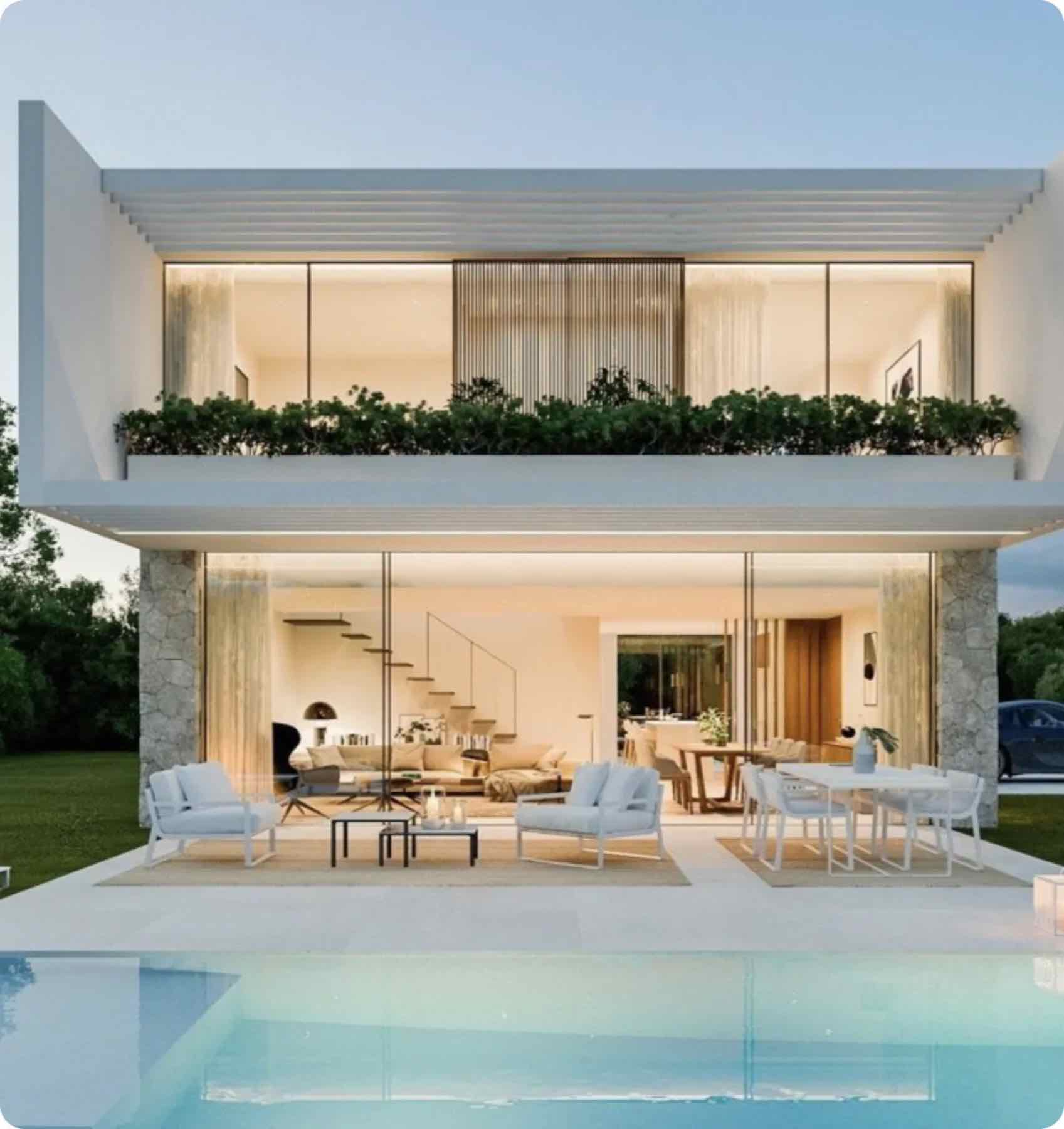
Casa Torimbia is in La Galguera, in the municipality of Llanes, 3.5 km from some of the municipality's beaches and with quick access to the A-8, according to its listing. It's a new-build villa of 202 m² on a plot of more than 700 m², with four bedrooms, three bathrooms, a garden, a porch and a terrace. There's underfloor heating throughout, something you'll be grateful for in an Asturian November. A 1/8 share costs 135,000 € (VIVLA listing, 19 October 2026) and comes with title deeds and six weeks a year; the VIVLA team looks after the house. Some of the images on the listing are renders, as the page itself points out, so it's worth seeing the house in person before deciding.
It is VIVLA's only home in Asturias.
If you're comparing the north, Cantabria has seven, with their own guide to buying a home in Cantabria; you can also browse all the homes.
VIVLA in Asturias
Llanes, co-owned.
A newly built home in eastern Asturias, with title deeds. Every share is one eighth and carries six weeks a year.
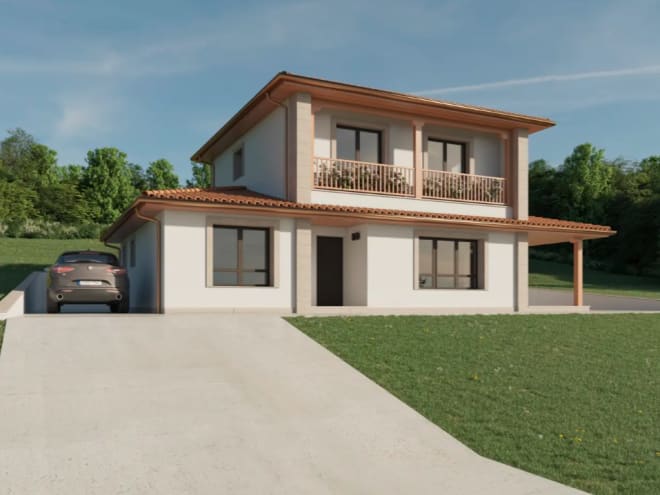
Shares shown are 1/8, each with 6 weeks a year. Prices and status as published on each home page on 21 October 2026 and subject to change; check the listing for current availability.
Frequently asked questions
Is it worth buying a home in Asturias?
Yes, if your plan is to spend summers and autumn breaks there and the rain doesn't keep you up at night. The east puts beach and mountains a few minutes apart and is well connected by the A-8. The trade-off is the climate: 128 days of rain a year at Asturias airport, according to AEMET, and a swimming season of three months.
What is the prettiest coastal village in Asturias?
Cudillero and Lastres are the postcard villages of the Asturian coast, with their houses stacked above the harbour. For longer stays, Llanes is more practical: it has services all year and beaches a few minutes away. In a second home, that ends up counting for more than the view from the lookout.
When is the best time to visit the Asturian coast?
For swimming, July to September, the only months with an average maximum above 21 degrees according to AEMET. For walking and seeing the sea at full strength, October: there are fewer people and the bufones de Pría come alive with the first ground swell. In August everything is open. Everything is also full.
Is eastern or western Asturias better?
For most people, the east. Llanes and Ribadesella are closer to Madrid and to Cantabria, and they have the Picos de Europa next door. The west, from Cudillero to Tapia, is cheaper and quieter. It suits you if you're after calm and don't mind adding more than an hour of driving every time you come up from Madrid.
Can you buy a home in Asturias through co-ownership?
Yes. VIVLA sells 1/8 shares in Casa Torimbia, in Llanes, at 135,000 € each, with title deeds and six weeks of use a year (VIVLA listing, 19 October 2026). It is VIVLA's only home in Asturias.
vivla co-ownership
Real ownership, a fraction of the cost
VIVLA offers managed co-ownership of luxury second homes across Spain — Mallorca, Ibiza, Menorca, Baqueira and many more. You own a registered share with a real title deed, not a use right, and VIVLA handles the purchase, the legal structure and year-round maintenance. It's the rational choice when you'll use the house a few weeks a year rather than the whole season.