 Explore blog articles


6 October 2026 – vivla
Things to Do on the Costa de la Luz in Autumn and Winter
Between October and February, the Costa de la Luz empties out almost completely. There are waves at El Palmar and wind at Tarifa, and along the cliffs of La Breña you'll barely pass another walker. Sanlúcar has Doñana across the water and manzanilla on the bar. Barbate has its mojama. The catch is that more than half the hotels close, so it pays to choose your town carefully.
What is the weather like on the Costa de la Luz between October and February?
Mild, with the odd spell of rain. In Cádiz city, the average November high is 19.6 °C and January's is 16 °C, according to AEMET's climate normals for 1981-2010. November brings 98 mm of rain, spread over about seven days. The rest of the month, lunch is eaten outdoors. And the wind eases off. The levante, the strong easterly, blows on around 16 days a month from May to August and drops to about ten from November to February, according to the study by meteorologist García de Pedraza held in the AEMET repository. No other time of year has less.
What changes most is the town itself: according to the INE, the Costa de la Luz de Cádiz tourist zone had 433 hotel establishments open in August 2025 and only 173 in January 2026.
Winter beaches: waves at El Palmar and wind at Tarifa
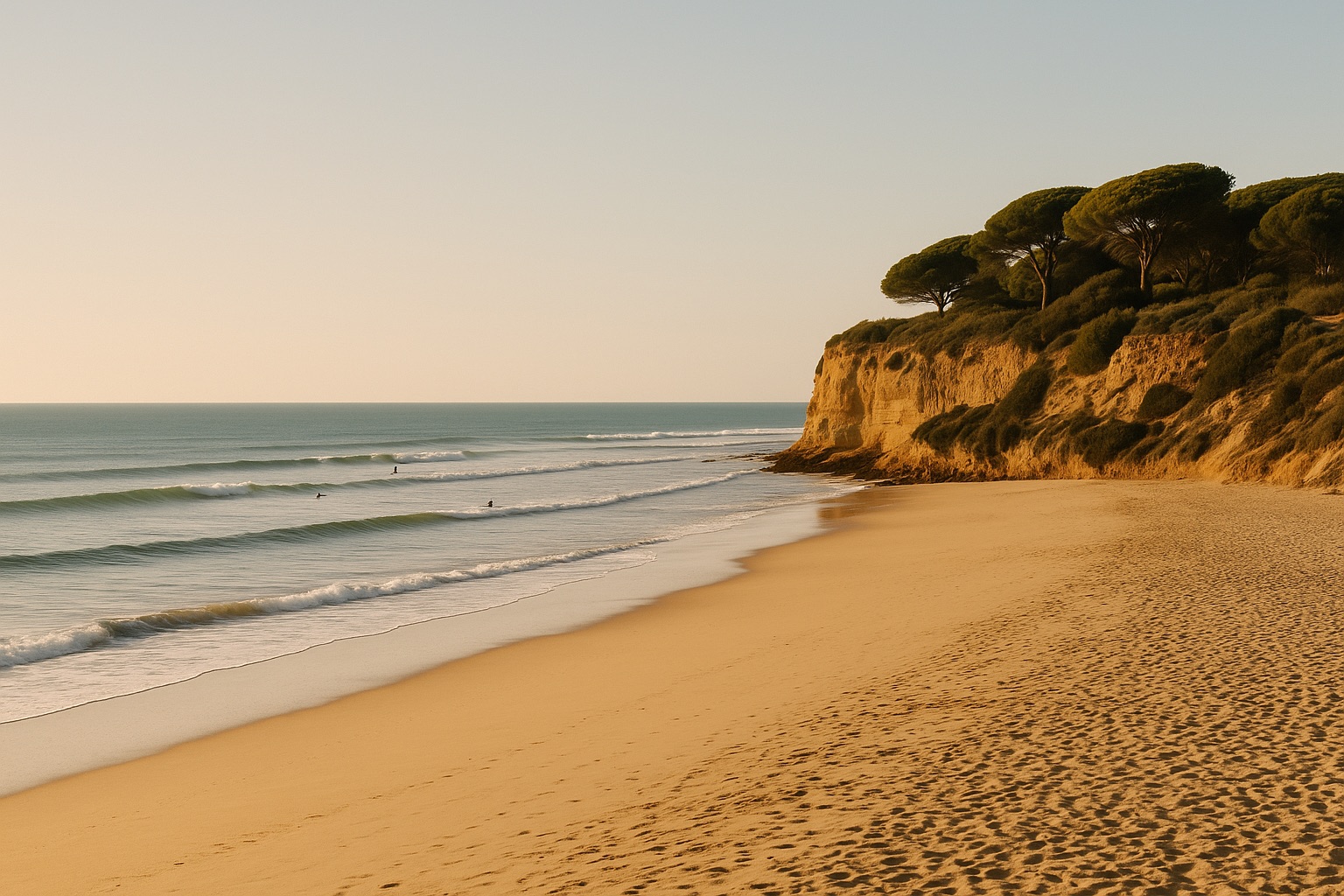
On a Saturday in November, El Palmar has more boards than towels. It is a straight, open beach facing west, in the municipality of Vejer, and its good waves arrive with the Atlantic storms of autumn and winter, just as the July and August crowds have gone. You'll need a full wetsuit. Further south, Tarifa lives off the wind. According to the same study held by AEMET, its observatory records wind on 280 days a year and only 85 days of calm. Los Lances and Valdevaqueros are the kitesurfing and windsurfing beaches. In winter you share them with far fewer people.
If you're not going in the water, the beach is still the plan. At low tide the sand is firm and you can walk for kilometres. Zahara, or La Barrosa in Chiclana, make for a long-sleeved stroll at five in the afternoon. The sun is already low.
On foot through La Breña and Bolonia
The most rewarding winter walk runs from Barbate to the Cabo de Trafalgar. It is stage 3 of the GR 145: 10 km and about three and a half hours, according to the Diputación de Cádiz route sheet. It sets off from the playa de la Hierbabuena and follows the Sendero del Acantilado through the Parque Natural La Breña y Marismas del Barbate. You walk among stone pines, high above the Tajo cliff, a wall between 90 and 100 metres tall, and halfway along the Torre del Tajo comes into view, a watchtower that guarded the coast against Barbary pirates in the 16th century. The path ends at Los Caños de Meca, beside the Trafalgar tombolo.
The route is linear, so leave a car at the end.
Further south, inside the Parque Natural del Estrecho, is the Bolonia dune, a Natural Monument more than 30 metres high, according to Andalucía Turismo, and still creeping inland. At the foot of the same beach lie the ruins of Baelo Claudia, the Roman town that lived off fishing and salting fish. Dune and ruins fit into a single morning.
Entry to the archaeological site is free for European Union citizens, and it is closed on Mondays.
Birds over the Strait and Doñana from Sanlúcar
Storks and raptors that spend the winter south of the Sahara cross the Strait here on their way to Africa. The Fundación Migres has been counting them since 1997. According to its figures as reported in the press, 556,160 soaring birds passed through between May and December 2023, with black kites and white storks out in front. The passage of storks and raptors lasts until early October. After that come the seabirds.
All you need is a viewpoint looking across to Morocco. And binoculars. The one at Cazalla, beside the N-340 near Tarifa, is the classic.
Doñana lies at the other end of the coast, opposite Sanlúcar de Barrameda. From the beach at Bajo de Guía a barge crosses the Guadalquivir; the visit carries on by 4x4 through the dunes and marshes and returns aboard the boat Real Fernando. It takes about two and a half hours. From October to February there are no trips on Mondays, according to the operator Doñana Visitas, and you need to book. This is precisely the season of the wintering birds, which settle on the marshes from October to February, according to the National Park's wildlife page. How many you see depends on how much rain there has been. The Estación Biológica de Doñana calculates that over 40 years, 9 of the 15 species it monitors have lost numbers, because there is not enough flooded marsh. Today the birds you see most are shovelers and pintails.
What to eat and drink in winter, from Barbate to Sanlúcar
Conil and Barbate each have more than 22,000 residents, according to the INE municipal register at 1 January 2025. The summer developments go dark, but these towns are lived in all year round. In January they are still open.
Vejer is something else. It sits on top of a hill, 190 metres above the sea and about ten kilometres from El Palmar, as its entry in Los Pueblos más Bonitos de España points out. People climb up to wander the whitewashed old town and look out over La Janda from above.
The almadraba, the traditional net-trap tuna fishery, belongs to spring. The tuna food routes in Barbate, Zahara, Conil and Tarifa are concentrated between late April and mid-June, when the tuna pass through towards the Mediterranean, according to the Patronato de Turismo de Cádiz. Winter is the time for mojama, tuna loin salted and air-dried. Mojama de Barbate has protected geographical indication status and is made only in Barbate and Vejer, according to its product specification.
The wine is to the north. Jerez, Sanlúcar and El Puerto de Santa María form the triangle of the Marco de Jerez, and Chiclana also falls within the designation. If it rains, it's a bodega day. Manzanilla can only be aged in bodegas in Sanlúcar, at the mouth of the Guadalquivir, and is served at 6 to 8 °C, according to the Consejo Regulador. Order shellfish to go with it.
In December, Jerez sings carols in the street. This is the zambomba, with bonfires and anís in courtyards and peñas, the local social clubs, and it has been a Bien de Interés Cultural, a protected heritage designation, since 2015, as the town hall's municipal notice recalls.
VIVLA homes on the Costa de la Luz
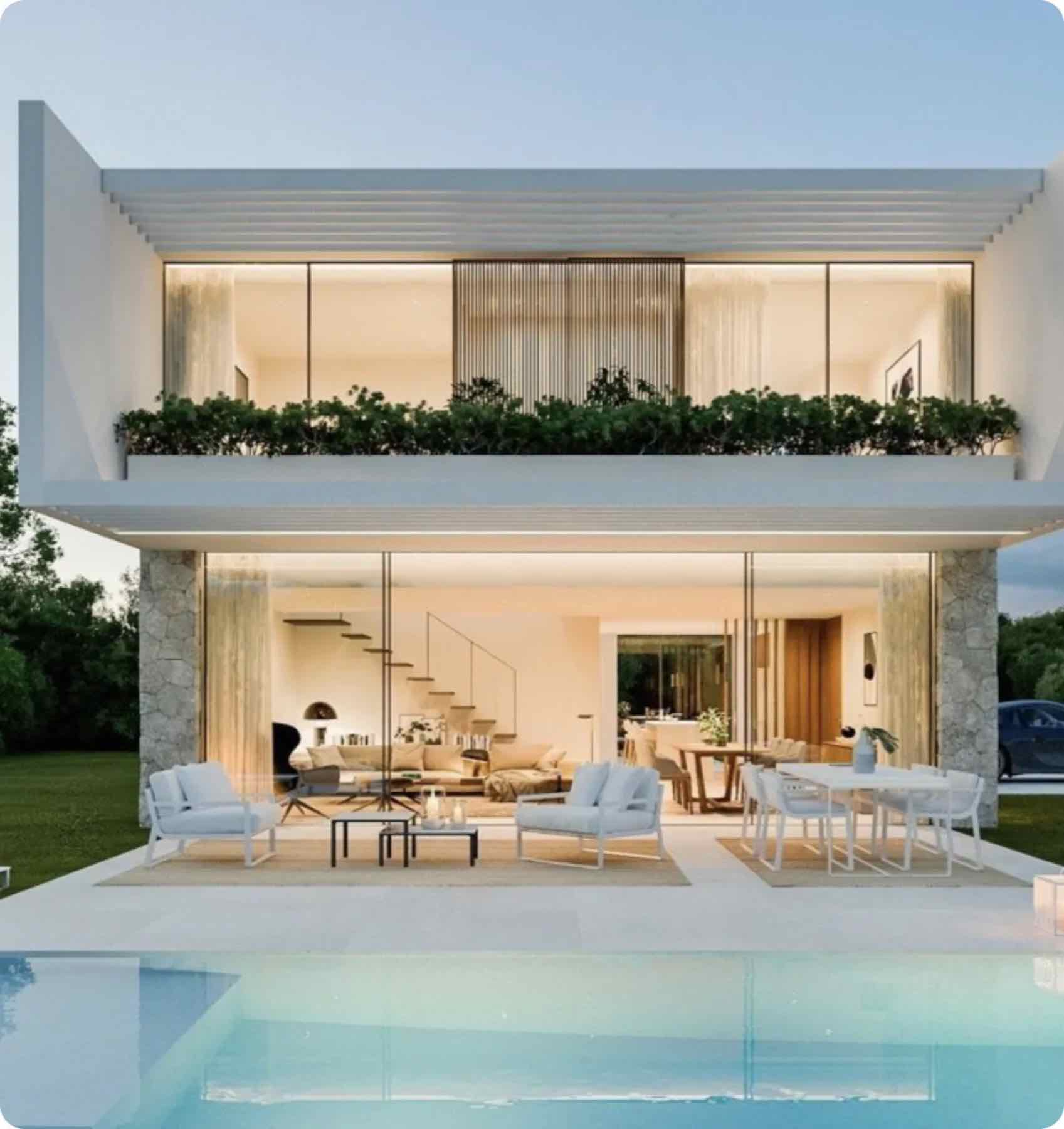
VIVLA has eight homes on the Costa de la Luz (public listings, October 2026). Five are in Roche, the Conil development set among pine woods and coves, about ten kilometres from the town: Casa Nara, Casa Mareta, Casa Solera, Casa Gades and Casa Sidonia, all with four bedrooms. Two more, Casa Tuna and Casa Salina, are in Atlanterra, and the eighth, Casa Alba, is in Zahara village. Six are sold out and have a waiting list. In October 2026, shares are on sale in Casa Salina, a four-bedroom duplex, at 195,000 € for a 1/8 share, and in Casa Alba, a three-bedroom penthouse, at 145,000 €. Salina is under construction and handover of Alba is expected in the first quarter of 2029. Each share is co-ownership with title deeds and gives six weeks a year. The towns and property prices of the area are covered in the guide to buying a home on the Costa de la Luz, and the homes on the destination page.
Frequently asked questions
Is the Costa de la Luz worth visiting in winter?
Yes, if you're going to walk or surf rather than lie on a towel. In Cádiz, the average January high is 16 °C (AEMET) and the beaches are almost empty. The trade-off is closures: the area goes from 433 hotels open in August to 173 in January (INE). It is best to stay in a town with year-round residents, such as Conil, Vejer or Barbate.
When is the almadraba season?
In spring. Bluefin tuna cross the Strait on their way to the Mediterranean, and the tuna routes of Barbate, Zahara, Conil and Tarifa run between late April and mid-June (Patronato de Turismo de Cádiz). In autumn and winter there is no fresh almadraba tuna. What remains is mojama from Barbate, which has protected geographical indication status.
Where can you see bird migration over the Strait?
From the viewpoints over the Strait between Tarifa and Algeciras, such as Cazalla, beside the N-340. According to Fundación Migres, storks and raptors cross mainly until early October; in October and November it is the turn of the seabirds.
How do you visit Doñana from Sanlúcar?
By boat and 4x4. From Bajo de Guía, a barge crosses the Guadalquivir and the visit continues by off-road vehicle through dunes and pine woods to the marshes, returning aboard the boat Real Fernando. It takes about two and a half hours and you need to book. From October to February there are no trips on Mondays (Doñana Visitas).
vivla co-ownership
Real ownership, a fraction of the cost
VIVLA offers managed co-ownership of luxury second homes across Spain — Mallorca, Ibiza, Menorca, Baqueira and many more. You own a registered share with a real title deed, not a use right, and VIVLA handles the purchase, the legal structure and year-round maintenance. It's the rational choice when you'll use the house a few weeks a year rather than the whole season.
Related Articles
-
copropiedad · 13 November 2026 · 9 min
Co-ownership for beginners: what to know before you buy a home with VIVLA
read more -

destinos · 10 November 2026 · 7 min
The best ski schools for kids in Baqueira
read more -
destinos · 9 November 2026 · 7 min
Baqueira guide 2026-27: getting there, lift passes, ski areas and what to pack
read more