 Explore blog articles


copropiedad · 13 November 2026 – vivla
Co-ownership for beginners: what to know before you buy a home with VIVLA
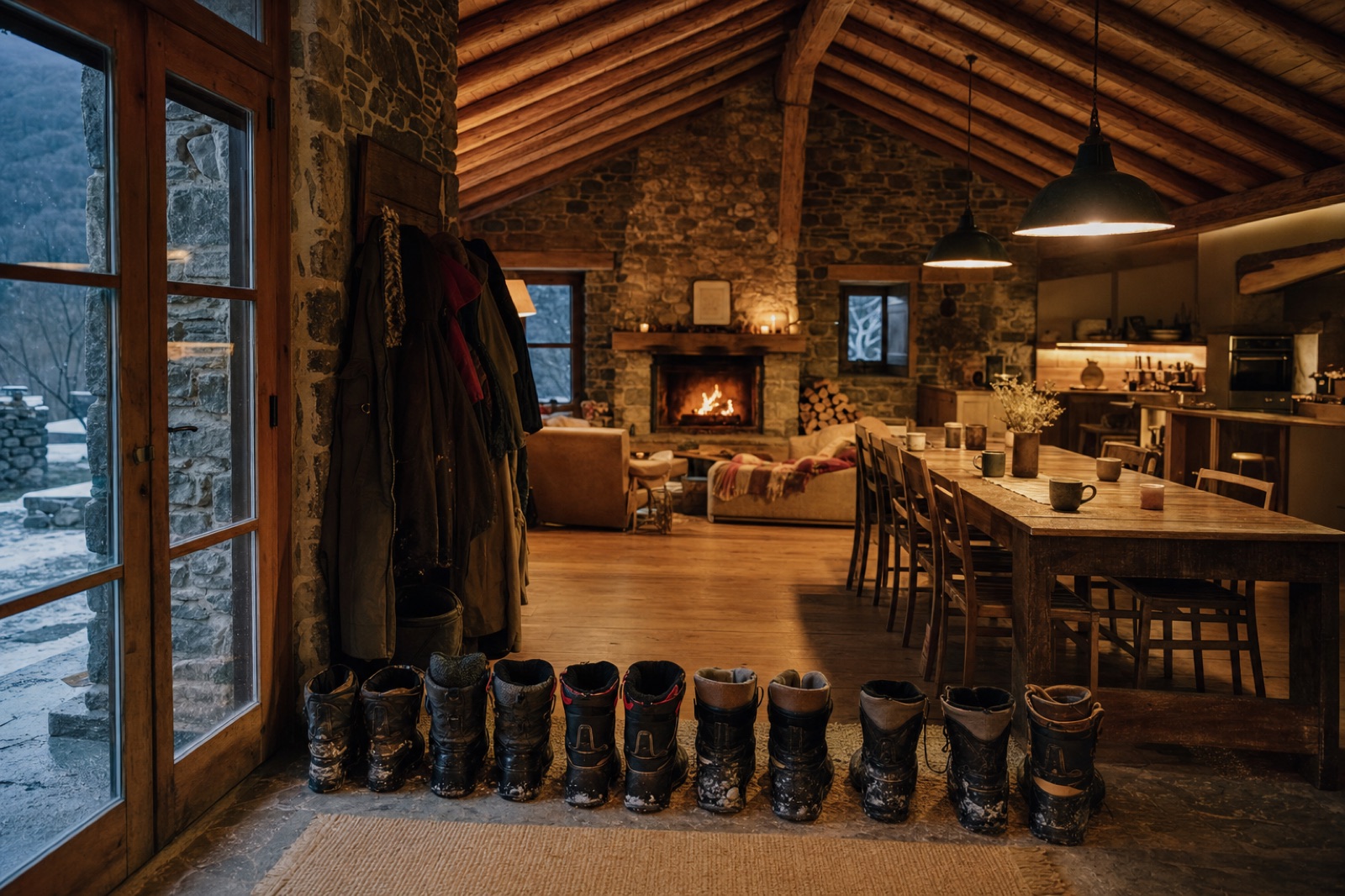
Sunday evening. You have a listing open for a three-bedroom house in Bagergue, in the Spanish Pyrenees, fireplace included, and one question keeps coming back: how does this actually work? The short answer fits in a paragraph.
Co-ownership for beginners comes down to this: you buy one of the eight shares in the company that owns a home, you pay one eighth of its price, and you get 42 days a year in it. Across the homes VIVLA has on sale today, one eighth costs between €120,000 and €195,000 (VIVLA catalogue, 6 November 2026). On top of that you pay your share of the running costs every year. The trade-off is a calendar split eight ways and a 12-month wait before you can sell.
What is co-ownership?
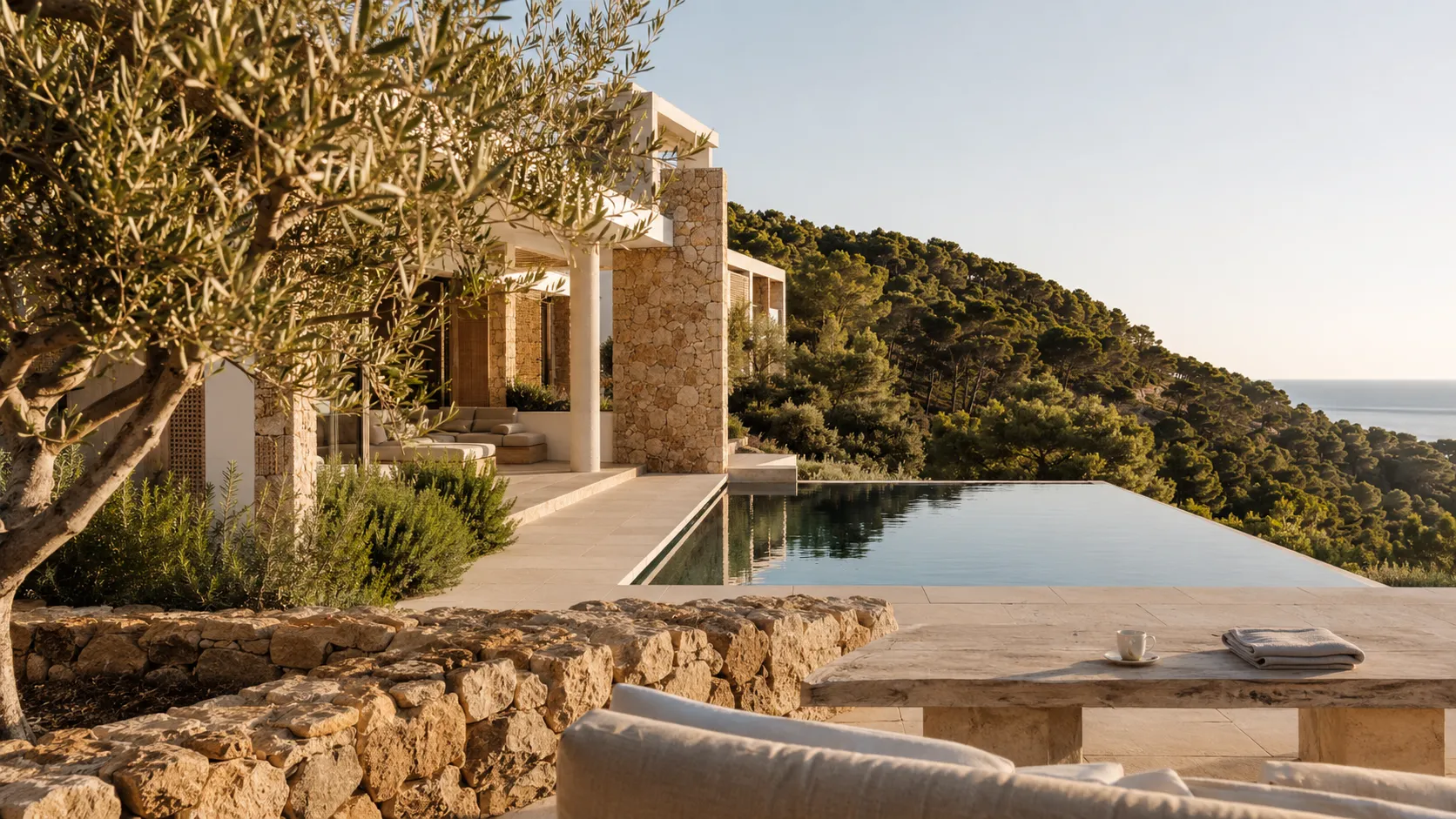
Several families buy one house together, each with its own share, and split the use and the costs according to what each one paid. VIVLA, which sells shares in holiday homes that come furnished and fully managed, runs the model with two fixed rules. Every home is divided into eight shares. And VIVLA manages it from start to finish, so the eight owners never have to agree on anything for the house to work. Its homes are in Baqueira, Menorca, Ibiza, Cantabria and the Costa del Sol, among other places.
Put simply: a house in the snow or by the sea without paying for all of it, and without spending August worrying about the boiler. The how it works page sets out the process in five steps, and this guide to home co-ownership goes deeper.
What exactly am I buying?
Each VIVLA home belongs to a Spanish limited company (a sociedad limitada, or S.L.) set up for that house alone and divided into eight shares. You buy one or more, up to four in the same home. Each share is one eighth of the home, and together the eight shareholders own 100% of it (FAQs). The purchase is signed before a Spanish notary, in a process much like any property sale. VIVLA's legal team goes through the contract with you first (how it works).
Alongside the share you sign the shareholders' agreement. Think of it as the rulebook of the house. It sets out how the calendar is shared, what happens if someone stops paying, what happens if VIVLA stops managing it.
What you do not get is your name on the Land Registry entry. The house is held by the S.L. and you are a shareholder in it, which is precisely why you can later sell your share without a new deed (how to sell your share). Before you sign, ask for the shareholders' agreement and read all of it. It tells you more about what you are buying than any brochure.
How much does it cost?
Two numbers matter. What you pay to get in, and what you pay every year.
The entry price depends on the home. Of the eight homes with shares available in VIVLA's catalogue on 6 November 2026, the most affordable is Casa Neret in Bagergue, at €120,000 for one eighth. The most expensive are Casa Ostau and Casa Saut in Tredòs, at €195,000. Homes in Menorca and Ibiza sit in between.
To reserve a share you pay a deposit. If the purchase falls through, you get it back. If it goes ahead, it comes off the price (VIVLA FAQs).
Then there is the annual management fee, which covers your share of the running costs and which VIVLA puts at 3 to 5% a year of the value of the share, roughly €300 a month for a €100,000 share (FAQs). Using that range, a €150,000 share would come to between €4,500 and €7,500 a year. That is a rough sum. It is not a figure for any specific home: the real amount depends on each house. There is one house rule worth knowing. A light bulb that dies of old age is paid for by all eight owners. One you break playing football in the living room is on you.
When can I go?
Each eighth gives you 42 days a year, about six weeks (how it works). They are spread across the seasons so nobody always ends up with the worst dates, or always with the best.
In a mountain home such as those in Baqueira, that means seven stays. Three fall in the ski season and add up to 17 days: one five-day stay in peak season (the early December bank holiday, Christmas, Epiphany or Easter) and two in the remaining ski weeks. The other four are outside the snow: three six-day stays, plus one of seven days in July or August. That makes 42 days. In beach homes you get six weeks, two in high season (June to September), two in mid season and two in low season.
Who picks first? In year one, the order follows purchase date. From year two, a two-round rotating booking system takes over: in round one, whoever had the worst calendar the previous year chooses first; in round two, whoever came off worst in round one. Booking for the following year opens in June. It all runs through the app (how booking works).
If New Year's Eve in the snow every single year is non-negotiable, co-ownership will make that hard. If Christmas one year and Easter the next works for you, it fits well.
Who looks after the house?
VIVLA. It handles maintenance and repairs, and the financial and legal side of the house too (FAQs). Each owner has a Guest Experience contact. That person gets the house ready before you arrive and can stock the fridge or book a private chef. Homes come furnished by VIVLA's in-house interior design studio. There is storage for your things between visits. In Baqueira, that means your skis.
You do not have to coordinate with the other seven owners. Your relationship is with VIVLA, which also organises get-togethers during the year if you want to meet them. The classic fear of sharing a house is the co-owner who stops paying. That is what Vivla Protection is for. VIVLA covers the gap and chases the debt. Your use of the house does not change (Vivla Protection and Vivla Autopilot).
What if I want to sell?
You can, once the first 12 months have passed. You set the price, using a comparative market analysis from VIVLA as a reference. The other owners have a right of first refusal. Only if none of them takes it does the share go to the open market through VIVLA's buyer network. The buyer inherits your calendar. No new deed is needed (how to sell your share).
Two things to be clear about. You sell your share to another person, at market value. And markets move both ways. If the house loses value, so does your eighth.
During that first year there is a side door. You can swap your share for another available VIVLA share. If the new one costs more, you pay the difference. If it costs less, you keep the difference as credit towards the new home's running costs (FAQs). If you might need that money within months, do not put it here.
What if I can't go one year?
It happens. A wedding on another continent, or a child in a cast right in January. You have three options:
- Give the stay away. Family or friends can use it with the same access and service as you (how booking works). Grandparents taking the grandchildren to the mountains in your February week needs no explaining.
- Swap it. Share your week with the community and earn keys. These are internal credits you can spend on another home in the network. They are not money and they expire after 24 months (home exchange and the keys system).
- Rent it. Once the two selection rounds and the 30-day exchange window close, you can put unused stays up for rent. VIVLA lists and manages them. The earnings do not reach you as income: they reduce your fees for the house (FAQs). Ask about the financial terms of renting before you sign (renting out your share).
If all of this fits, the next step is to look at a specific home. Its listing shows the price of one eighth and how its days are shared, and from there you can ask for a virtual tour, an in-person visit or a stay in a VIVLA home before you decide (how it works). The Baqueira homes are on the destination page.
Frequently asked questions
Is this the same as buying weeks in a holiday resort?
No. With those schemes you buy the right to use a unit for some weeks a year, and the building stays with the company that runs it. With VIVLA you buy a share in the company that owns the house, which you can sell or leave to your heirs. It is a reasonable question, and it has its own long answer.
What happens if VIVLA goes out of business?
The house still belongs to the S.L., which means to its owners, and the shareholders' agreement treats it as a change of manager, the same change the owners could make if they were unhappy with the service. VIVLA also commits to hand over its list of local suppliers and free use of its app (FAQs). The catch: choosing the new manager becomes a decision for the eight owners.
Can I buy more than one eighth?
Yes, up to four shares in the same home (FAQs). Days and costs grow in the same proportion. Two eighths mean twice the stays and twice the fee. What you cannot do is end up owning the whole house.
Can I try the house before buying?
Yes. VIVLA can arrange a virtual tour, an in-person visit or a stay in any of its homes so you can see if it suits you (how it works). If you can, go in the season you plan to use it. Baqueira in August and Baqueira in January feel like two different houses.
This article is general information about VIVLA's model, not legal, tax or financial advice. Prices and terms come from pages published by VIVLA as of 6 November 2026; they may change, and the contract documents for each home are what count. Check them on the listing and with your own adviser before you sign.
vivla co-ownership
Real ownership, a fraction of the cost
VIVLA offers managed co-ownership of luxury second homes across Spain — Mallorca, Ibiza, Menorca, Baqueira and many more. You own a registered share with a real title deed, not a use right, and VIVLA handles the purchase, the legal structure and year-round maintenance. It's the rational choice when you'll use the house a few weeks a year rather than the whole season.