 Explore blog articles

destinos · 8 June 2023 – vivla
Ten destinations on the Costa del Sol
The Costa del Sol stretches more than 150 kilometres along Andalusia's southern coast. It's the kind of place where you can have breakfast watching superyachts in Puerto Banús, lunch in a 16th-century mountain pueblo, and dinner with your toes in the sand. The diversity is what makes it special — and what makes it one of the most attractive regions in Spain to own a second home.
This guide covers ten places that, between them, give you the full Costa del Sol experience: the glamour, the heritage, the food, the nature and the slow-paced lifestyle that has drawn northern Europeans here for decades.
Marbella and Puerto Banús: the international stage
Marbella is the international face of the Costa del Sol. The Old Town (Casco Antiguo), with its orange-tree-lined squares and Moorish walls, is the soul of the city — small restaurants, art galleries, family-run shops. The Golden Mile connects Marbella to Puerto Banús, the marina that defined Costa del Sol luxury in the 1970s and still does today.
If you read our piece on Marbella as a vibrant retreat, you already know the city is much more than its reputation suggests. Beyond the marina, you have some of the best gastronomy in Andalusia, world-class golf and a coastline that has held its real estate value through every cycle.
Mijas Pueblo: the white village in the mountains
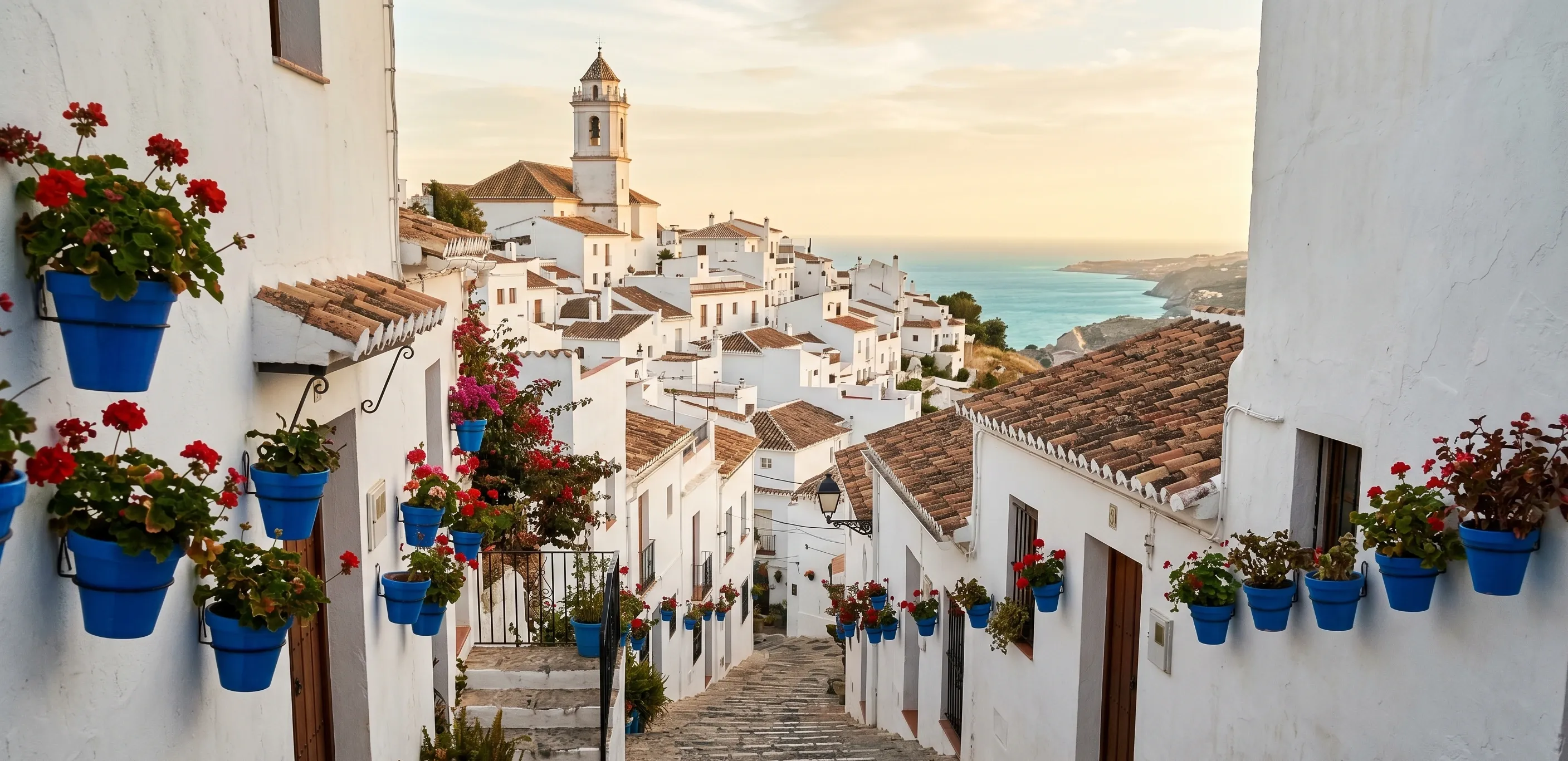
Twenty minutes inland from the coast, Mijas Pueblo is the postcard image of an Andalusian white village. The streets are too narrow for cars, the houses are draped in geraniums, and the donkey taxis (yes, they still exist) take you up the steepest paths. The viewpoint at the Plaza de la Constitución gives you the entire coastline from Fuengirola to Marbella.
Mijas is the perfect afternoon escape from the beach: cooler air, slower pace, traditional food in family tabernas, and an unhurried kind of beauty that's becoming rare on European coasts.
Ronda: the dramatic city in the cliffs
Ronda sits on top of a 100-metre gorge that splits the city in two. The Puente Nuevo, an 18th-century stone bridge, connects the old Moorish quarter with the newer 18th-century town. Walking across it is one of those moments that justify the entire trip.
Ronda is a 90-minute drive from the coast, but it's a non-negotiable for anyone serious about exploring Andalusia. It has the oldest bullring in Spain, some of the most prestigious wineries of the Sierra de Málaga, and a quality of light that has attracted painters and writers from Hemingway to Orson Welles.
The wineries of the Serranía
The Sierra de Málaga is producing some of the most interesting wine in Spain right now — small bodegas like Descalzos Viejos and F. Schatz are reinterpreting native varieties at altitude. Reserve in advance.
Málaga, Estepona, Sotogrande and the rest
Málaga city
Often skipped in favour of the resort towns, Málaga has reinvented itself as a cultural capital. The Picasso Museum, the Centre Pompidou Málaga, the contemporary art at CAC — all in a walkable, beach-side city centre with the kind of food scene Spain is famous for.
Estepona
The quieter, more residential alternative to Marbella. The Old Town has been carefully restored with murals on every corner, and the marina is half the chaos of Puerto Banús with much of the same charm.
Sotogrande
Spain's most exclusive private community, where polo, sailing and golf define the calendar. The Valderrama and La Reserva golf courses are world-class. Vivla has homes in Sotogrande for owners who want to be part of this lifestyle without the friction of buying outright.
Nerja and the Caves
An hour east of Málaga, Nerja's Balcón de Europa offers the best Mediterranean view of the entire coast. The nearby Caves of Nerja are one of the most impressive prehistoric sites in Spain.
Frigiliana
Voted multiple times the most beautiful village in Spain, Frigiliana sits above Nerja with views of the sea and the Sierra Almijara. White houses, narrow streets, a thriving artisan scene.
Antequera and El Torcal
The geographic heart of Andalusia. Antequera has the prehistoric Dolmens (UNESCO World Heritage Site), and just outside, El Torcal is one of the most surreal landscapes in Spain — limestone formations shaped by 150 million years of erosion.
Casares
A bright white village dramatically perched on a hilltop, Casares is the kind of place that makes you stop the car and just look. The vista from its castle is one of the great Mediterranean views.
Why a second home on the Costa del Sol makes sense
The Costa del Sol has more than 320 days of sunshine a year, the most international airport in southern Spain (Málaga), and a property market that has weathered every cycle better than the European average. It's also one of the only places in Europe where you can ski in the morning (Sierra Nevada is two hours away) and swim in the sea in the afternoon.
If owning a piece of this coast — without the friction and capital of buying outright — interests you, explore Vivla's homes on the Costa del Sol. From Marbella to Sotogrande, the homes are curated for the family that wants to actually live the destination.
vivla co-ownership
Real ownership, a fraction of the cost
VIVLA offers managed co-ownership of luxury second homes across Spain — Mallorca, Ibiza, Menorca, Baqueira and many more. You own a registered share with a real title deed, not a use right, and VIVLA handles the purchase, the legal structure and year-round maintenance. It's the rational choice when you'll use the house a few weeks a year rather than the whole season.