 Explore blog articles

real estate · 4 October 2023 – vivla
Seven elements that turn a home into a high-end property
The word "luxury" is overused in real estate. Glossy listings throw it at any property with a gym and a pool. But true luxury homes — the kind that hold their value across decades, that feel different the moment you walk in, that buyers compete for — share a specific set of features that go far beyond price.
This article identifies the seven elements that, in our experience curating Vivla's portfolio, separate a genuinely high-end property from a merely expensive one.
1. Location: the irreplaceable variable
The cliche is true: location is the only thing you cannot change. A high-end property is anchored in a place that is structurally scarce — a beachfront plot with no neighbours, a cliff position with protected views, a corner address in a heritage neighbourhood. The land beneath the home is what determines whether a luxury asset retains value over decades.
The corollary: a beautifully built home in a mediocre location is not a high-end property. A modest home in an irreplaceable location often is. When evaluating any luxury property, the location question must be answered first, and the answer must be "impossible to replicate".
2. Quality of construction and materials
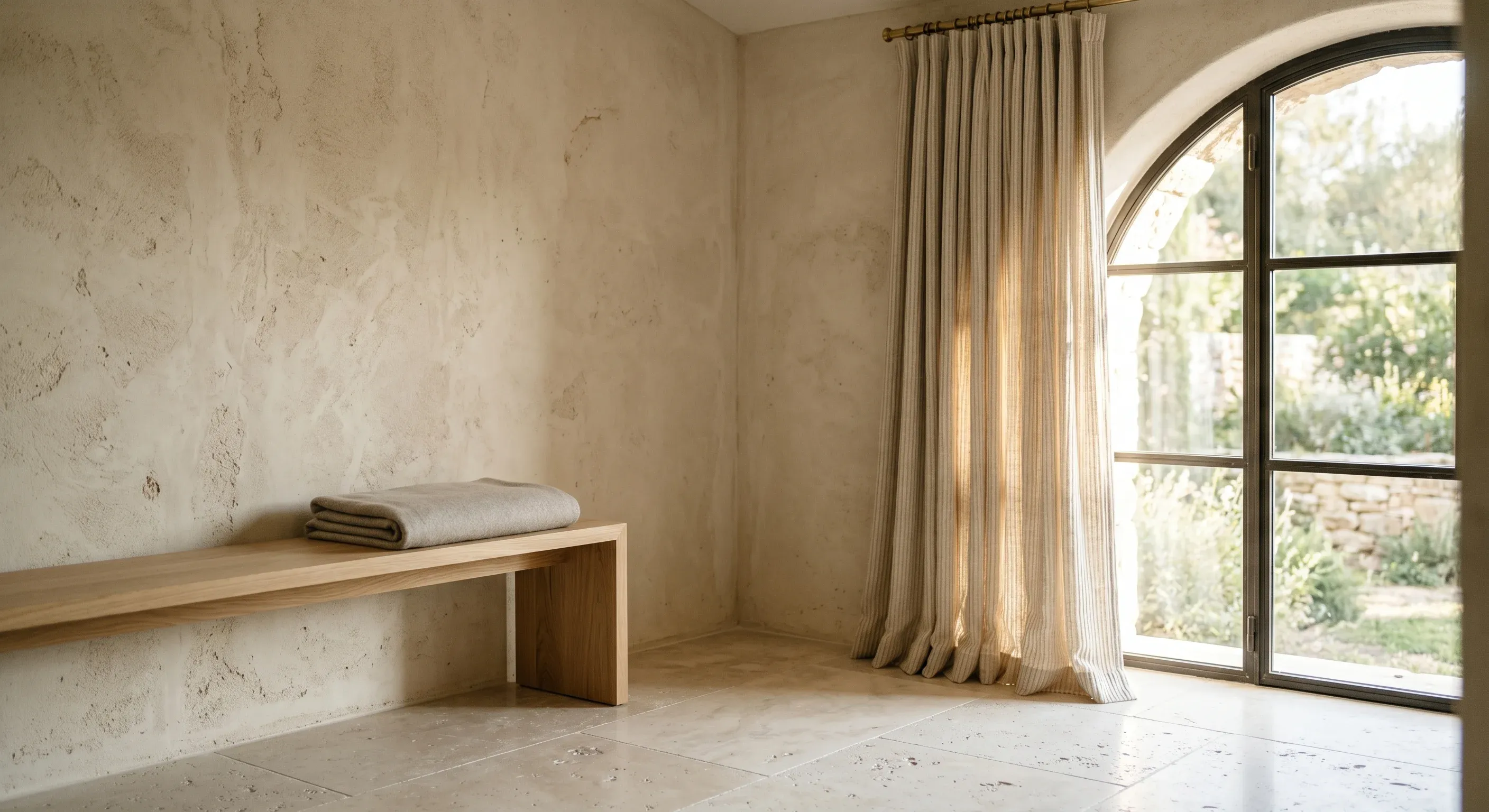
The second non-negotiable is the quality of how the home was built. Stone walls instead of concrete blocks. Solid hardwood instead of veneer. Hand-laid terracotta or natural stone floors. Brass and copper fittings instead of chromed steel. Real plaster walls instead of gypsum board.
These choices announce themselves to a buyer who knows what to look for, and their absence is equally obvious. They also age well — a 50-year-old stone house with original features is often more desirable today than a 5-year-old concrete house with luxury finishes that already look dated.
3. Architectural integrity and provenance
The best luxury homes have a clear architectural concept — they were designed by a specific architect, built in a coherent style, and renovated with respect for that intent. A Mallorca finca should still feel like a finca; a Marbella villa should still feel like a Mediterranean villa; a Madrid apartment should still feel like its 19th-century origins.
Beware of properties that have been renovated repeatedly without architectural coherence — features piled on, styles mixed, materials clashing. They tend to lose value as fashions move on. A home with architectural integrity ages with grace.
4. Light, views and the relationship with the outside
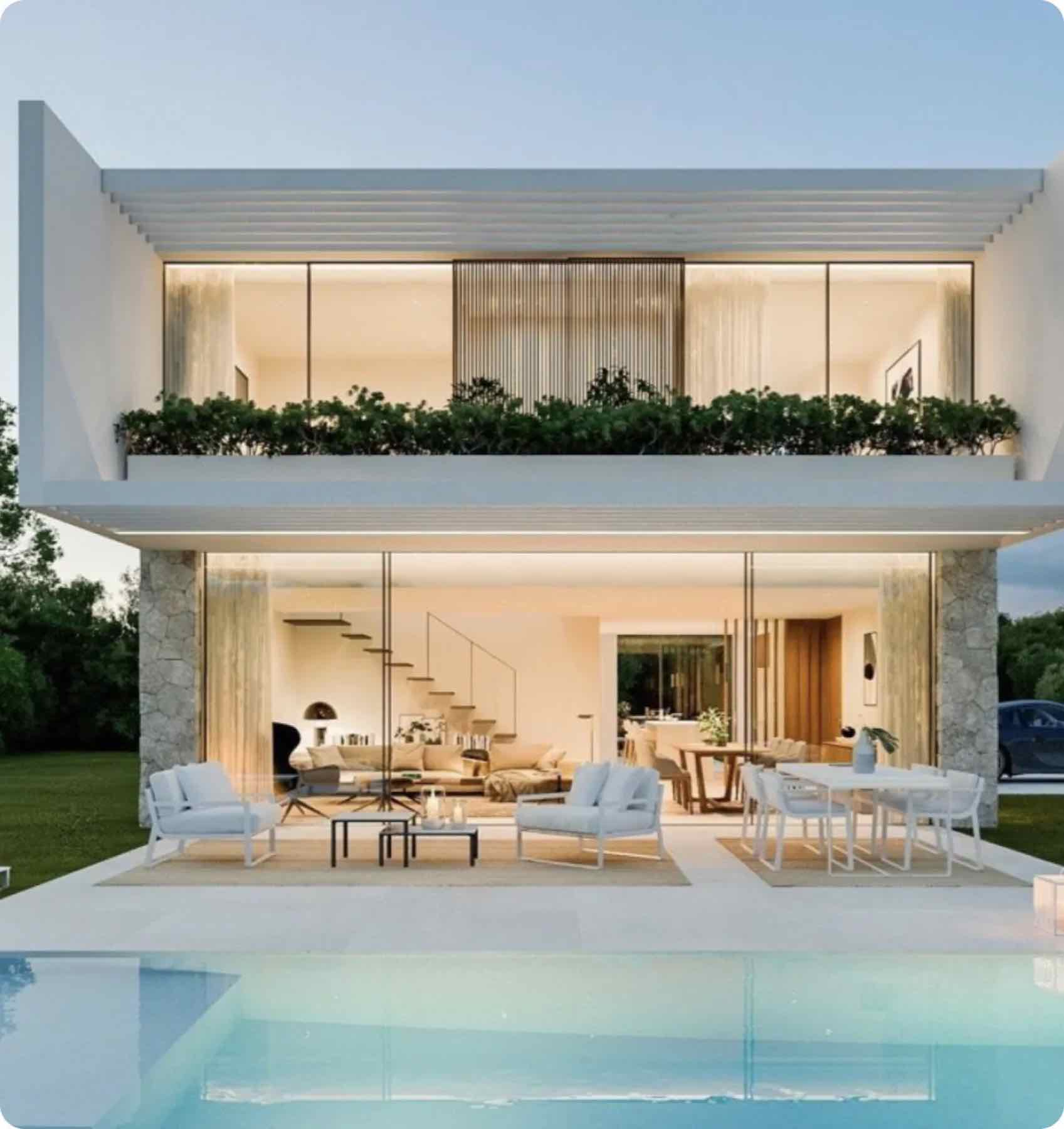
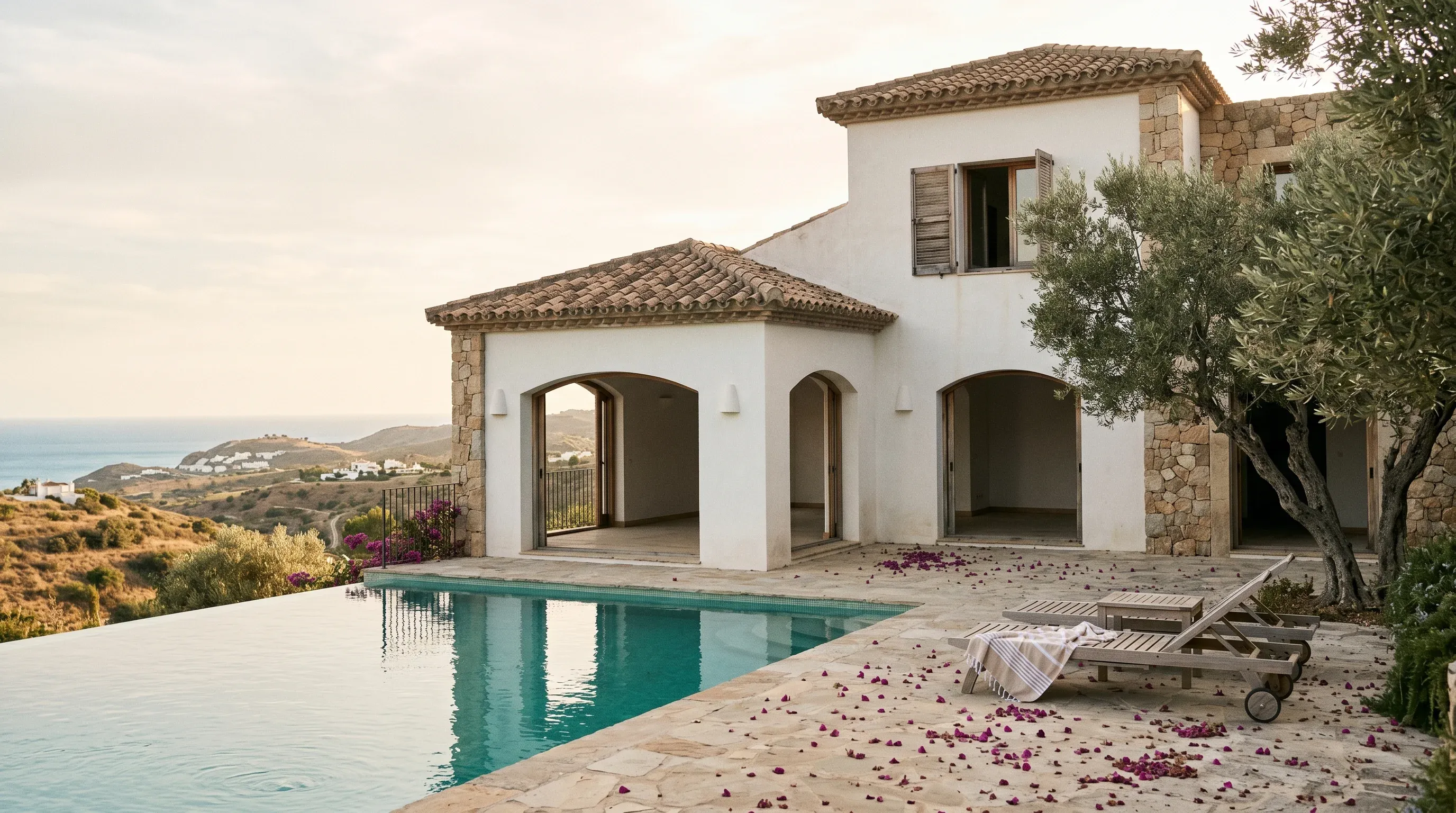
The fourth element is how the home connects to its environment — the natural light it receives, the views it frames, the gardens or terraces that extend it. A luxury home is designed around the best light of the day and the best views from the plot. Rooms are oriented to capture sunrise or sunset; living spaces flow to outdoor terraces that extend the indoor area; window proportions frame views like paintings.
Once you know to look for it, the difference is instantly visible. In high-end Mediterranean homes, the outdoor terrace is often as carefully designed as the living room — and sometimes used more.
5. Privacy and acoustic quality
Privacy is a structural feature: a home that you cannot see from the road, a plot large enough that neighbours do not invade your daily life, and acoustics that block traffic, music or the sound of a swimming pool. A truly high-end home is silent in the right places — a quality that can only be engineered into the property at the time of construction.
6. Pool, gardens and outdoor design
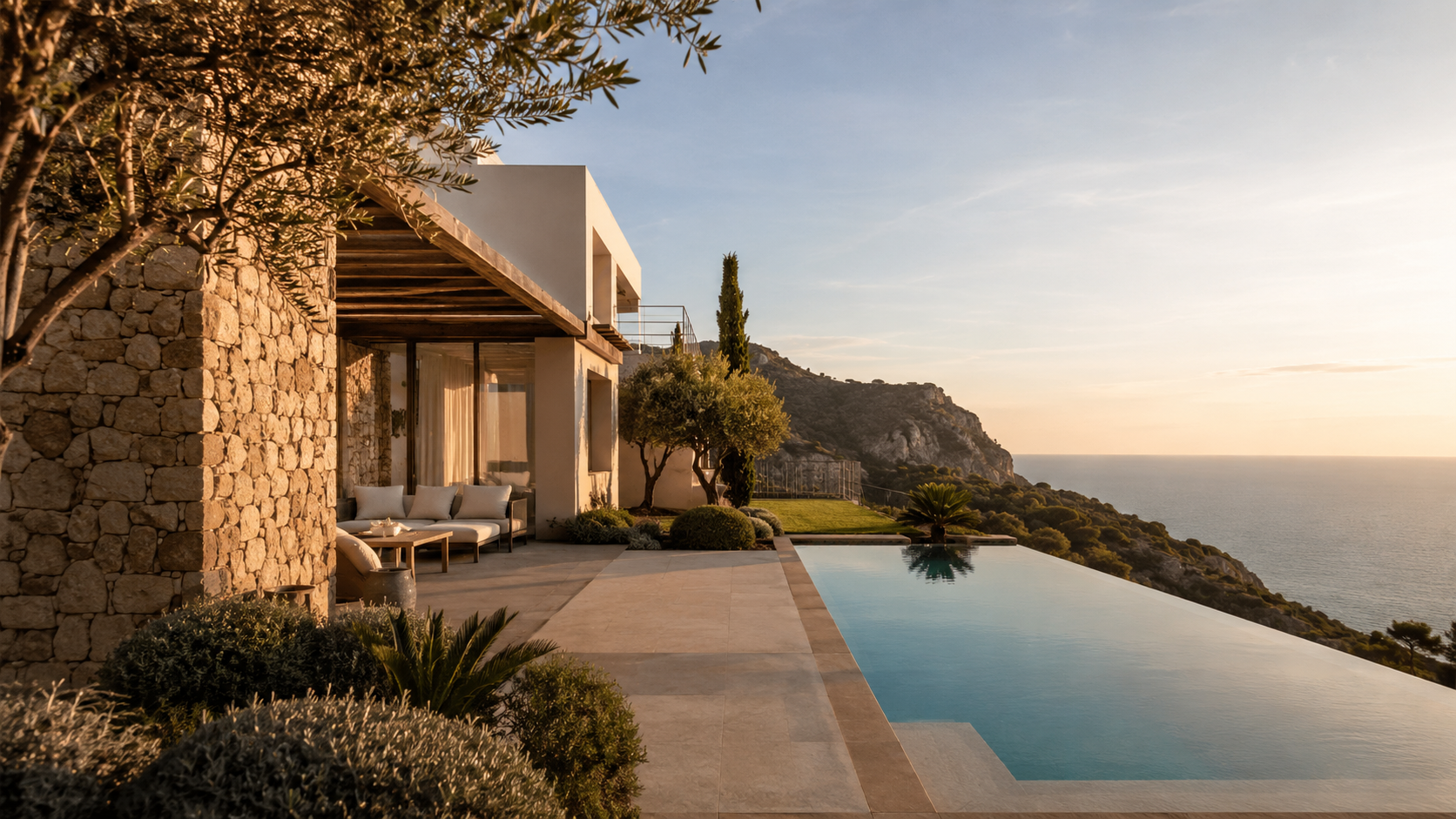
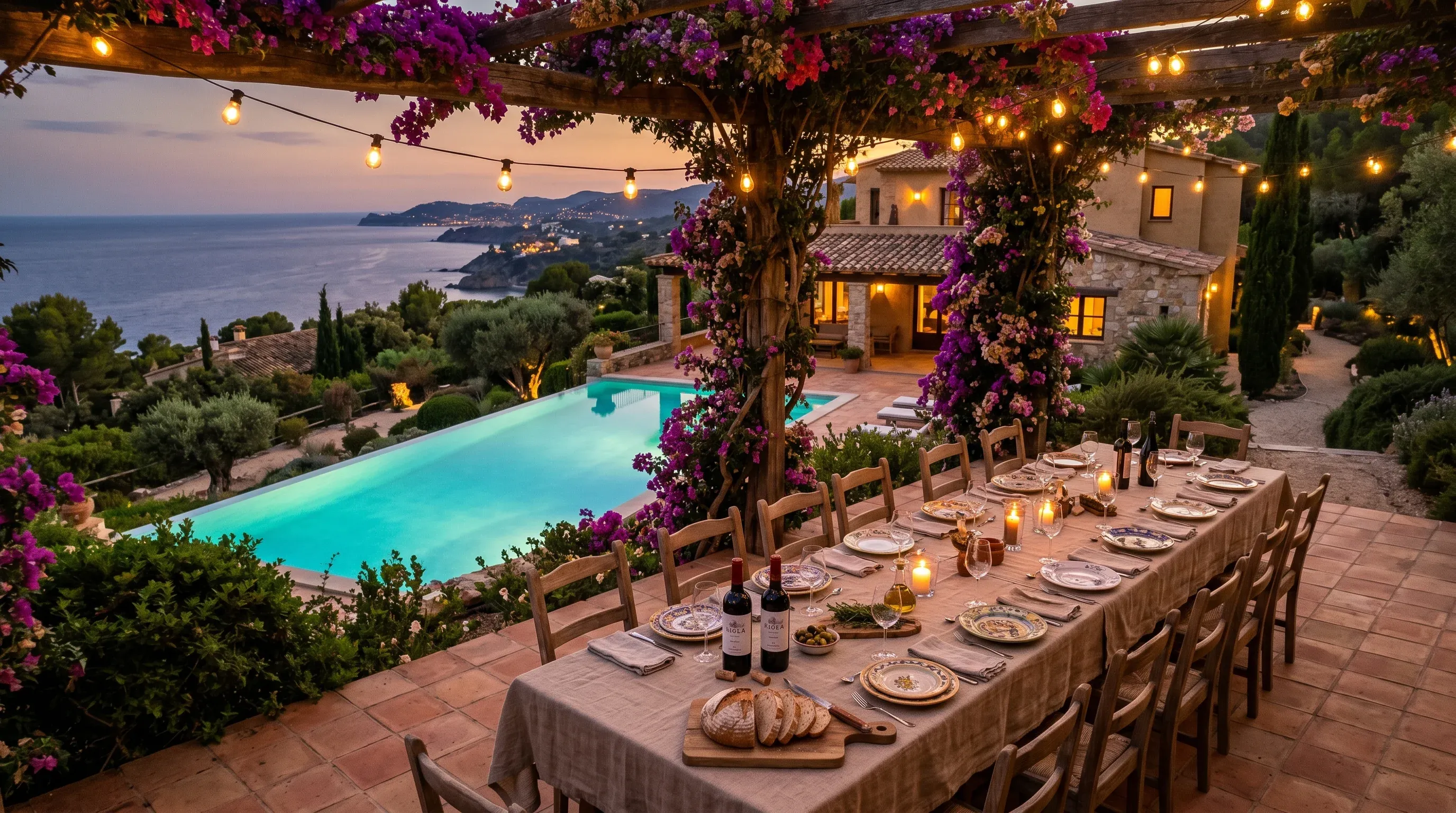
The pool deserves its own mention. A high-end pool is not a backyard rectangle — it is integrated into the architectural composition of the home, often with infinity edges, custom tile, mature landscaping around it, and a clear visual relationship with the main house. Add to this mature gardens (trees take decades to grow), pergolas, outdoor kitchens and shaded terraces — these are the features that turn a Mediterranean home into a place where you actually want to spend full days.
7. Professional management and the operational layer
The seventh element is invisible but transformative: a professional team running the property. A high-end home that is poorly managed loses its qualities quickly — the pool dirty, the gardens unkempt, the systems failing, the home not ready when you arrive. A high-end home that is professionally managed feels effortless: keys waiting, fridge full, garden in bloom, every system working.
This is one of the structural advantages of fractional ownership through a platform like Vivla: every home in our portfolio comes with full operational management as a feature, not an afterthought. The home you arrive to is exactly the home you'd expect a luxury property to be — every time.
vivla co-ownership
Real ownership, a fraction of the cost
VIVLA offers managed co-ownership of luxury second homes across Spain — Mallorca, Ibiza, Menorca, Baqueira and many more. You own a registered share with a real title deed, not a use right, and VIVLA handles the purchase, the legal structure and year-round maintenance. It's the rational choice when you'll use the house a few weeks a year rather than the whole season.
Related Articles
-
real estate · 22 June 2026 · 8 min
How Much a Second Home in Spain Really Costs: A 5-Year Cash Flow
read more -
real estate · 19 May 2026
Sharing a Second Home in Spain: Legal, Financial and Lifestyle Guide
read more -
real estate · 19 May 2026
Should You Buy a Second Home in Spain? The Honest Math Behind the Decision
read more