 Explore blog articles

copropiedad · 15 April 2026 – vivla
What is a timeshare
The concept dates back to 1963, when Swiss developer Hapimag pioneered the first vacation-ownership scheme in Switzerland. Two years later, the Hilton Hale Kaanapali project replicated the formula in Maui, and by the late 1970s timeshares had spread through North America and Europe. Spain caught the wave during the 1990s, mostly through coastal resorts.
The product made sense for a specific traveler: someone who returns to the same destination year after year and prefers a guaranteed slot to a hotel reservation. That niche still exists. U.S. timeshare resorts ran at an 80% average occupancy rate in 2024 — well above the roughly 63% reported for the hotel sector — and the industry posted $10.5 billion in total sales volume, per the ARDA/Ernst & Young 2025 report.
The problem is what happens after you sign. Annual fees climb, resale is brutal, and the contracts can last decades. The model has evolved alongside legal scandals (a 2015 ruling by Spain's Tribunal Supremo voided thousands of European timeshare contracts) and shifting buyer expectations toward flexibility and actual property ownership.
This guide walks through the mechanics, the real costs, the risks, and where fractional ownership fits as a modern alternative.
What exactly is a timeshare and how does it work?
A timeshare is a vacation-property ownership model where multiple buyers share use of a single unit — typically a condo, villa, or resort apartment — with each owner allocated a fixed amount of time per year. The unit is divided into 52 weekly intervals, and you pay for one or more of them.
There are two foundational structures, and the difference matters legally:
- Deeded ("fee simple") timeshare: you receive a recorded deed for your fractional interest in the real estate. You can sell, rent, or pass it on through inheritance. You also remain liable for taxes and fees indefinitely.
- Right-to-use (RTU) timeshare: you don't own anything tangible. You lease usage rights from the developer for a fixed period — commonly 20 to 99 years — after which the contract expires and the property reverts to the developer.
The FTC notes that the laws governing timeshares vary by the state or country where the property sits, which complicates resale and exit. The ARDA 2025 report counted 1,497 timeshare resorts and roughly 195,800 units in the United States alone, with 71% configured as two-bedroom or larger to fit family travel.
What are the main types of timeshare contracts?
Beyond the deeded vs. right-to-use split, timeshares are sold under four usage formats. Each one trades flexibility for predictability:
- Fixed week: the same week, the same unit, every year. Best for travelers who want zero booking friction and accept that "their week" is locked in. Holiday weeks command a premium.
- Floating week: you book any available week within a defined season. More flexibility, more competition during peak demand.
- Points-based (vacation clubs): you buy a balance of points and redeem them across a network of resorts. Larger properties, peak weeks, and premium destinations cost more points. Hilton Grand Vacations, Marriott Vacation Club, and Wyndham Destinations operate the largest U.S. point networks.
- Biennial: usage every other year, often half the upfront cost and half the annual fees.
There's a fifth category that creates confusion: "fractional ownership" sold inside the timeshare industry. Some resort developers use the term loosely to describe deeded timeshares of 1/4 or 1/13 with longer usage windows. True fractional ownership — the kind built around a single luxury home with 4 to 12 co-owners — sits in a separate legal and economic category, covered below.
How much does a timeshare cost in 2026?
Sticker price is only the down payment on a much longer bill. According to the ARDA 2025 State of the Vacation Timeshare Industry report, the average U.S. timeshare interval sold for $24,714 in 2024. The average annual maintenance fee climbed to $1,480 that same year — a 17.5% jump in twelve months and roughly a 36% increase over five years, per the Ernst & Young analysis behind the ARDA report.
A realistic cost stack looks like this:
- Upfront purchase: $24,714 average; entry-level deals can start near $10,000, luxury intervals run well past $50,000.
- Annual maintenance fees: $1,480 average, raised most years. Industry average financing rate sits around 14.8%, pushing monthly payments to $325–$400 for buyers who finance the purchase.
- Special assessments: one-off charges for renovations, storm damage, or underfunded reserves. The ARDA 2025 report noted that close to 30 resorts temporarily closed in 2024 due to storm damage, which pushes insurance and reserve calls up.
- Exchange and booking fees: $10–$50 per transaction, plus annual membership in exchange networks like RCI or Interval International.
Over a 20-year hold, Finn Law Group's estimate puts cumulative maintenance fees alone near $44,484 — separate from the purchase, financing, and assessments. The FTC's own consumer guidance is blunt about this: "the value of a timeshare is in its use as a vacation destination, not as an investment."
Why do timeshares have such a bad reputation?
Three structural problems explain the reputation, and none of them have been fixed by the industry.
Contracts that don't end when you want them to. Most timeshares lock buyers into perpetual fee obligations. Paying off the original purchase doesn't stop maintenance charges — those continue for as long as you hold the deed, and they continue rising. Some owners report cumulative payments exceeding the resale value of the property within a decade.
A resale market that barely exists. Run any "for sale by owner" timeshare listing through eBay or Redweek and you'll find weeks listed for $1 with no takers. Supply outstrips demand because developers prioritize new sales over secondary inventory, and most buyers who want to use the model buy direct. The FTC has documented sustained patterns of resale and exit scams that re-victimize owners trying to escape.
Legal cracks in the model. Spain's Tribunal Supremo issued a landmark 2015 ruling declaring most European timeshare contracts illegally sold, allowing thousands of holders to claim back their investment. Multiple Spanish chains went bankrupt in the aftermath. The U.S. has seen its own pattern of FTC enforcement actions against resale fraud operators — Resort Solution Trust and Vacation Communications Group are two documented cases where the FTC and Florida Attorney General secured court orders freezing assets and halting deceptive practices.
The defense from the industry is that satisfied long-term owners exist and resort occupancy is strong — both true. The catch is that the model works for the resort operator regardless of whether it works for any individual owner.
Fractional ownership: a more flexible alternative to timeshare
Fractional ownership and timeshare get lumped together, but they're structurally different products.
Where a timeshare typically splits a single unit among 52 owners and grants one week of access, fractional ownership splits a single luxury home among 4 to 12 co-owners and grants several weeks per share. The decisive distinction is the deed: a fractional owner receives a recorded ownership interest in the actual property (usually through an LLC or tenancy-in-common structure), which means the share can appreciate, be sold on the open market, financed, or inherited like any other real-estate asset.
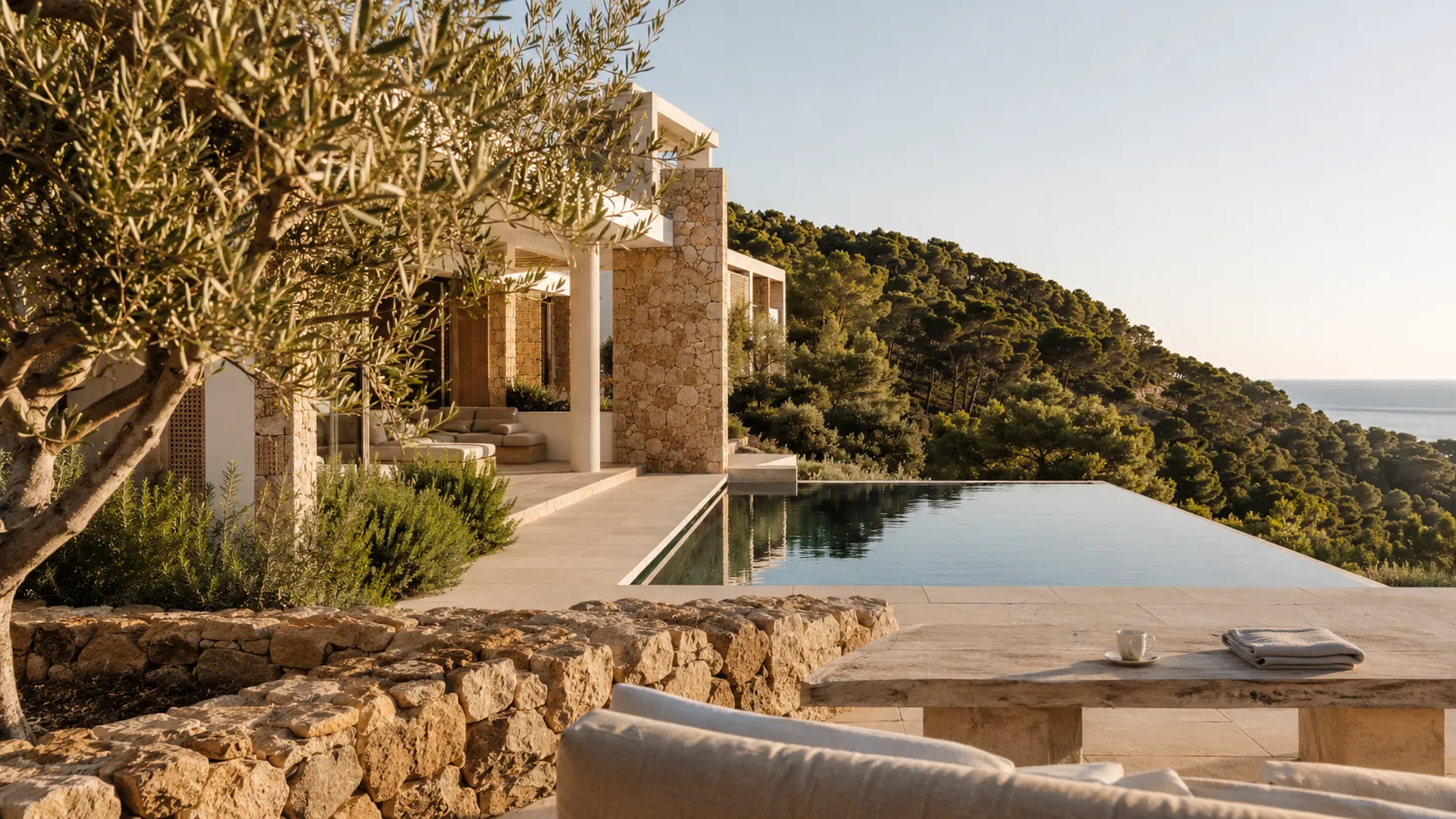
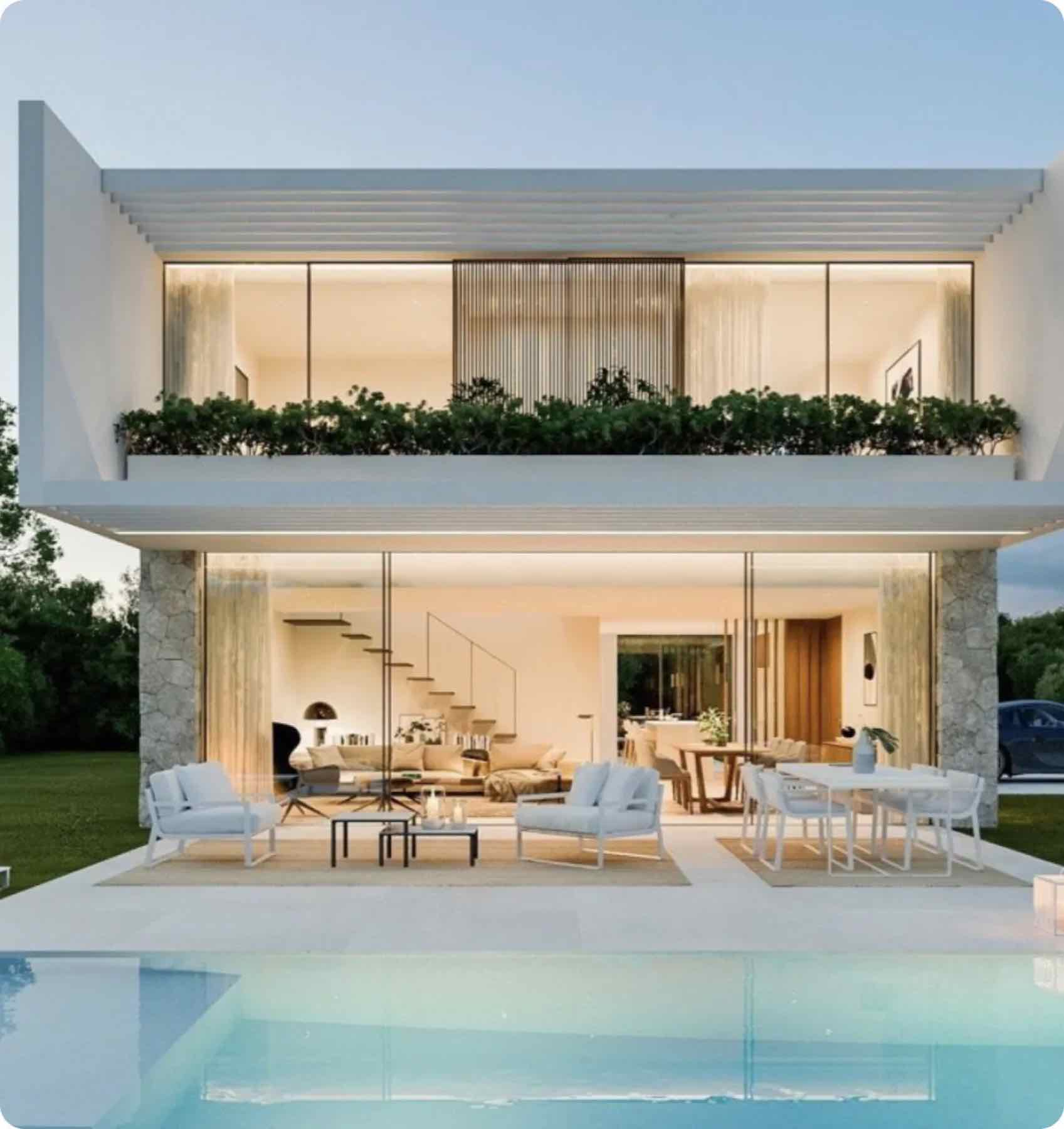
At VIVLA, each home is divided into 8 fractions. Buying one fraction gives you legal ownership of one-eighth of a designed, fully managed vacation home in destinations like Ibiza, Formentera, Menorca, Costa Brava, Baqueira, or Costa del Sol — and 6 weeks of confirmed use every year. Costs are split proportionally across owners: a single annual fee covers maintenance, utilities, insurance, the Studio's interior renovation, and the Community Team's daily management.
Three differences that matter most when you compare side-by-side:
- Equity vs. expense: a fractional share is real estate and behaves like real estate; a timeshare is a vacation product, and the FTC says so explicitly.
- Resale: a fractional home in a desirable Spanish market trades through standard real-estate channels. A timeshare typically does not.
- Time and flexibility: 6 weeks of use per fraction at VIVLA versus 1 week of use per timeshare interval, with rotating high-season access so every owner gets prime dates.
See available VIVLA homes or talk to our team to understand how the model fits the way you actually want to spend time in a second home.
vivla co-ownership
Real ownership, a fraction of the cost
VIVLA offers managed co-ownership of luxury second homes across Spain — Mallorca, Ibiza, Menorca, Baqueira and many more. You own a registered share with a real title deed, not a use right, and VIVLA handles the purchase, the legal structure and year-round maintenance. It's the rational choice when you'll use the house a few weeks a year rather than the whole season.