 Explore blog articles


17 October 2026 – vivla
What to See in Jávea and Dénia: Coves, the Montgó and the Old Town
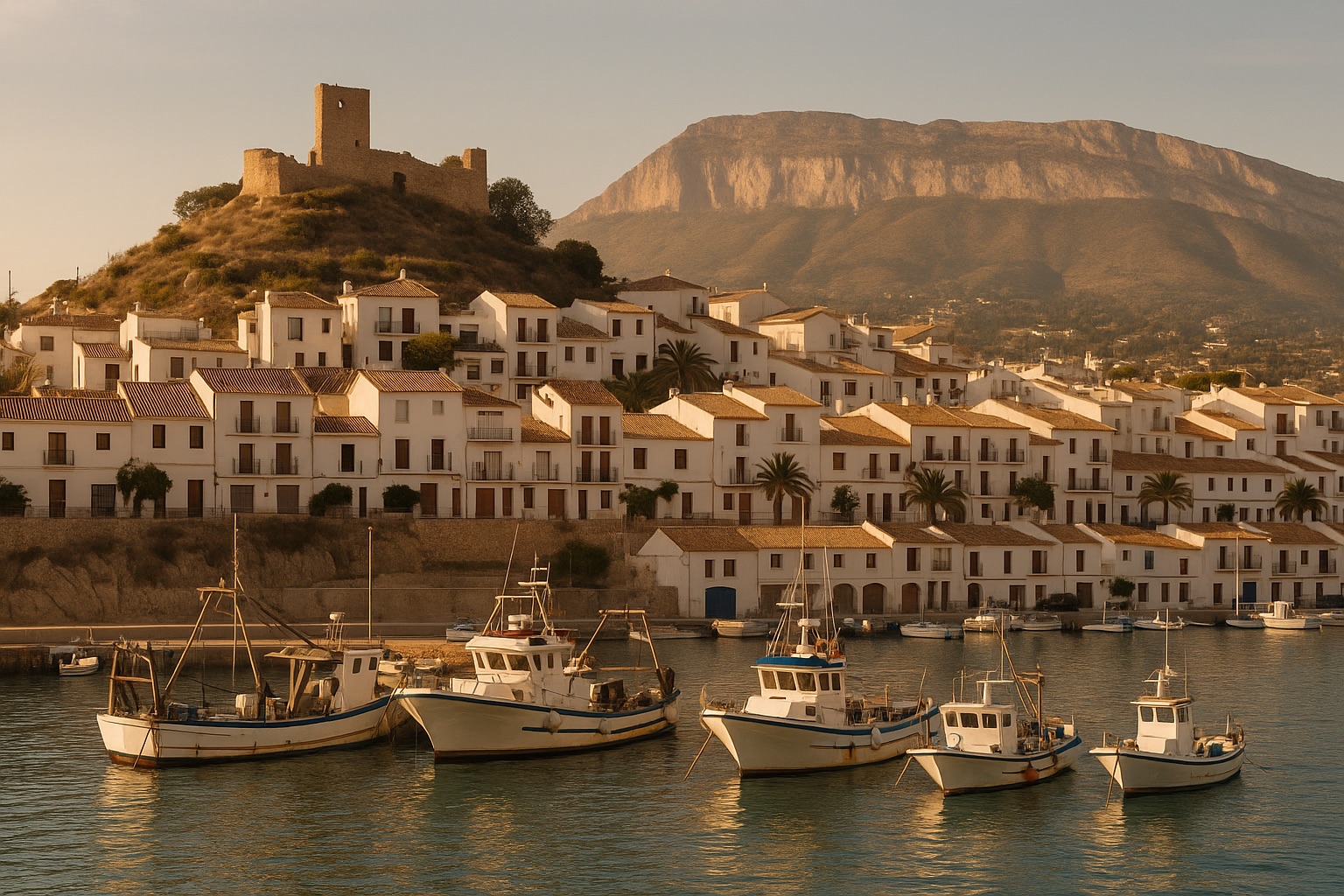
Jávea and Dénia have rocky coves and two capes topped by lighthouses. Between the two towns rises the Montgó, a mountain of 753 metres. Jávea has the Granadella, the Portitxol, the Arenal, the fortress church of San Bartolomé and the Duanes de la Mar quarter. Dénia has its castle with Les Roques at its feet, the Baix la Mar quarter and the red prawn. It all fits into a long weekend. In August, with patience.
Jávea, from the coves to the old town
Jávea is really three places: the town itself, inland, and by the sea the port and the Arenal, several kilometres away; getting from one to another almost always means the car. The coves lie to the south, and the Granadella, the last one in the municipality, is ringed by pine woods. Stone, not sand. The Portitxol, also known as cala de la Barraca, faces the island of the same name, and you drive down to it along steep streets from Balcón al Mar. The trouble with both in summer is parking: once the spaces fill up, Xàbia Town Council lowers a barrier that stops cars getting through, and in 2025 parking cost 9 € a day (Alicante Plaza). In July and August, set the alarm early.
The Arenal is the opposite: flat sand with a promenade and café terraces, for the children in July or a stroll in January.
The old town sits a few kilometres from the sea, takes an hour to walk round and is presided over by the Gothic church of San Bartolomé, which has fortress walls and a flat roof because it served as a refuge for the town. It has been listed as a Bien de Interés Cultural since 2018 (Alicante Plaza). Down at the port lies Duanes de la Mar. It is the quarter of the fish market and the whitewashed fishermen's houses, and the real surprise there is the church of Nuestra Señora de Loreto, opened in 1967, whose interior ceiling is shaped like a ship's keel (javea.com). A walk of barely more than a kilometre is enough to take in the quarter (MACMA).
The two capes and Les Rotes
Cabo de San Antonio, which separates Dénia from Jávea, has a viewpoint at the top beside a lighthouse first lit in 1855. From there you look north to Dénia with the Gulf of Valencia behind it, and south over the whole bay of Jávea (denia.net). Below lies a marine reserve. You can dive, but not fish. Cabo de la Nao, further south, is the easternmost point of the Valencian coast. Its lighthouse dates from 1928, and from the viewpoints around it, above cliffs more than a hundred metres high, Ibiza can be made out on very clear days (MACMA).
On the Dénia side, Les Rotes is the rocky shoreline that begins south of the port, and a seafront promenade of about seven kilometres runs along it from the town (MACMA). Where the tarmac ends stands the Torre del Gerro, from the 16th century, and from there a path leads to the Cova Tallada, an old quarry cut into the cliff. It does need planning, though. From 15 June to 15 October, and at Easter, you need a free permit from the Montgó Natural Park, with a limited number of places each day (denia.net). The rest of the year you can go in without booking. Or arrive by kayak.
Climbing the Montgó
The Montgó, a natural park since 1987, reaches 753 metres at its summit (Generalitat Valenciana).
The classic ascent starts from Dénia along the Camí de la Colònia, beside the hermitage of Pare Pere. It is about 6 kilometres each way with almost 800 metres of climb, and loose stone on the final stretch (MACMA). Allow the whole morning. From the top you see the bays of Dénia and Jávea at once, and it becomes clear at a glance how the two towns sit, one on each side of the mountain. If you don't fancy the summit, you can stop at the Cova del Camell, which is on the same path and easy.
In summer, better not: with no shade and thirty degrees it feels endless. In November or March it makes a good Saturday outing.
Dénia on foot, from the castle to the port
Dénia makes sense from above. The castle occupies a hill right in the centre, with the Palau del Governador at the top and the archaeological museum inside, and you walk up from Plaza de la Constitución along Calle San Francisco; taken slowly, it fills half a morning. At its feet lies Les Roques, the oldest quarter, dating from al-Andalus: short, sloping streets, of which Hospital and San Cristóbal are the best preserved. Baix la Mar, the old fishermen's quarter, sits beside the port. Its houses are painted in bright colours, and the explanation you hear again and again is a practical one: that way they could be recognised from the boats. The squares of Sant Antoni and de la Creu are the most photographed.
The port has two sides. One is the fish market. Dénia's red prawn comes from the deep grounds between the coast and Ibiza, and it is what people order most in town. With it come arroz a banda and suquet de peix. Sea urchins and dried octopus too (Comunitat Valenciana).
Since December 2015, Dénia has been a UNESCO Creative City of Gastronomy (denia.net).
The other side is the ferry terminal, with Baleària sailings to Formentera and Ibiza. The fast ferry takes about two and a quarter hours. A day trip to Ibiza is possible (denia.net).
What to see in each season, and what happens in August
Autumn is the best time for nearly all of the above: in October the sea is still mild and the coves have room, and halfway through the month the Cova Tallada stops requiring a booking. Rain is scarce and comes in sudden bursts. In Alicante, the wettest month on record is September, with 56 mm according to AEMET (AEMET). Winter is for walking. In January highs hover around 17 °C in Alicante, the nearest reference station. You climb the Montgó in short sleeves and have lunch on a terrace at Dénia's port, which stays open just like its market, while Jávea's residential estates are left with fewer neighbours.
In spring the Cova Tallada booking returns for Easter. The first swims, in May, are for the brave. June brings Jávea's Fogueres de Sant Joan, which culminate on the 24th with the cremà. The big fiestas come in July. In Dénia, the Festa Major de la Santísima Sangre ran from 4 to 12 July 2026, with the Bous a la Mar in a ring set up beside the water in the port (denia.net). Jávea celebrates its Moros y Cristianos in July (javea.com).
August calls for village hours: a cove first thing and Baix la Mar as the sun goes down. At midday, the Montgó is out of the question.
VIVLA's homes in Jávea and Dénia
VIVLA has three homes in this part of the Costa Blanca, each divided into eight shares with six weeks a year. Casa Almara, in L'Almadrava-L'Estanyó, in Les Marines de Dénia, is a new-build ground-floor home still under construction, with three bedrooms and a private garden. A 1/8 share costs 155,000 € (VIVLA listings, October 2026). Casa Tosalet, in Jávea, and Casa Deveses, a seafront penthouse in Dénia, have four bedrooms each and are sold out, with a waiting list. The areas and prices, and what the year is like outside August, are covered in the guide to buying a home in Jávea and Dénia. All three homes are on the Costa Blanca page.
Frequently asked questions
Which is better to visit, Jávea or Dénia?
Dénia, if you're travelling without a car or out of season; Jávea, if you're coming for the coves. Dénia is a town with life all year round; it has the castle and the port, with a ferry to Ibiza. Jávea is about coves and capes, with residential estates. Almost everything there is done by car. They are neighbouring municipalities, separated by the Montgó, so the usual thing is to stay in one and see both.
What is the most beautiful cove in Jávea?
The best known is the Granadella, ringed by pine woods at the southern end. The Portitxol, facing its island, is the other one everybody mentions. Both are stony. In summer the car park barrier closes once it fills: arrive early.
How long does it take to climb the Montgó?
From Dénia, along the Camí de la Colònia, allow the whole morning. It is about 6 kilometres each way with almost 800 metres of climb, and loose stone at the end. If you don't want to reach the summit, the Cova del Camell is an easy walk on the same path. Best from October to April.
Is it worth going to Jávea and Dénia in August?
Yes, if you accept its rules. The water is at its best, but the coves fill up early and the car park barrier comes down quickly. For the Montgó, only at dawn. In September and October the water is still good and there are far fewer people.
vivla co-ownership
Real ownership, a fraction of the cost
VIVLA offers managed co-ownership of luxury second homes across Spain — Mallorca, Ibiza, Menorca, Baqueira and many more. You own a registered share with a real title deed, not a use right, and VIVLA handles the purchase, the legal structure and year-round maintenance. It's the rational choice when you'll use the house a few weeks a year rather than the whole season.
Related Articles
-
copropiedad · 13 November 2026 · 9 min
Co-ownership for beginners: what to know before you buy a home with VIVLA
read more -
destinos · 10 November 2026 · 7 min
The best ski schools for kids in Baqueira
read more -
destinos · 9 November 2026 · 7 min
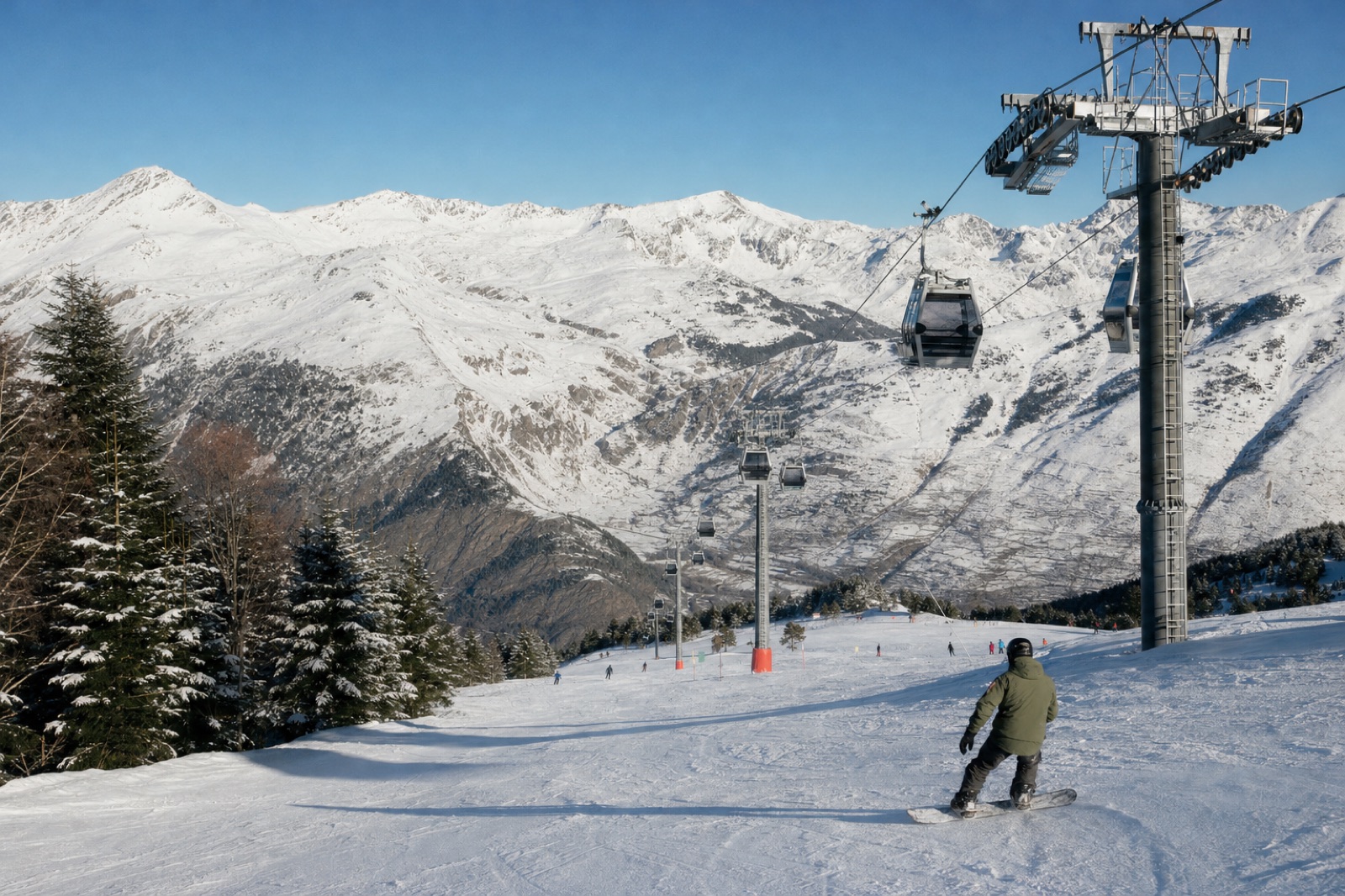
Baqueira guide 2026-27: getting there, lift passes, ski areas and what to pack
read more