destinations
·
July 16, 2026
·

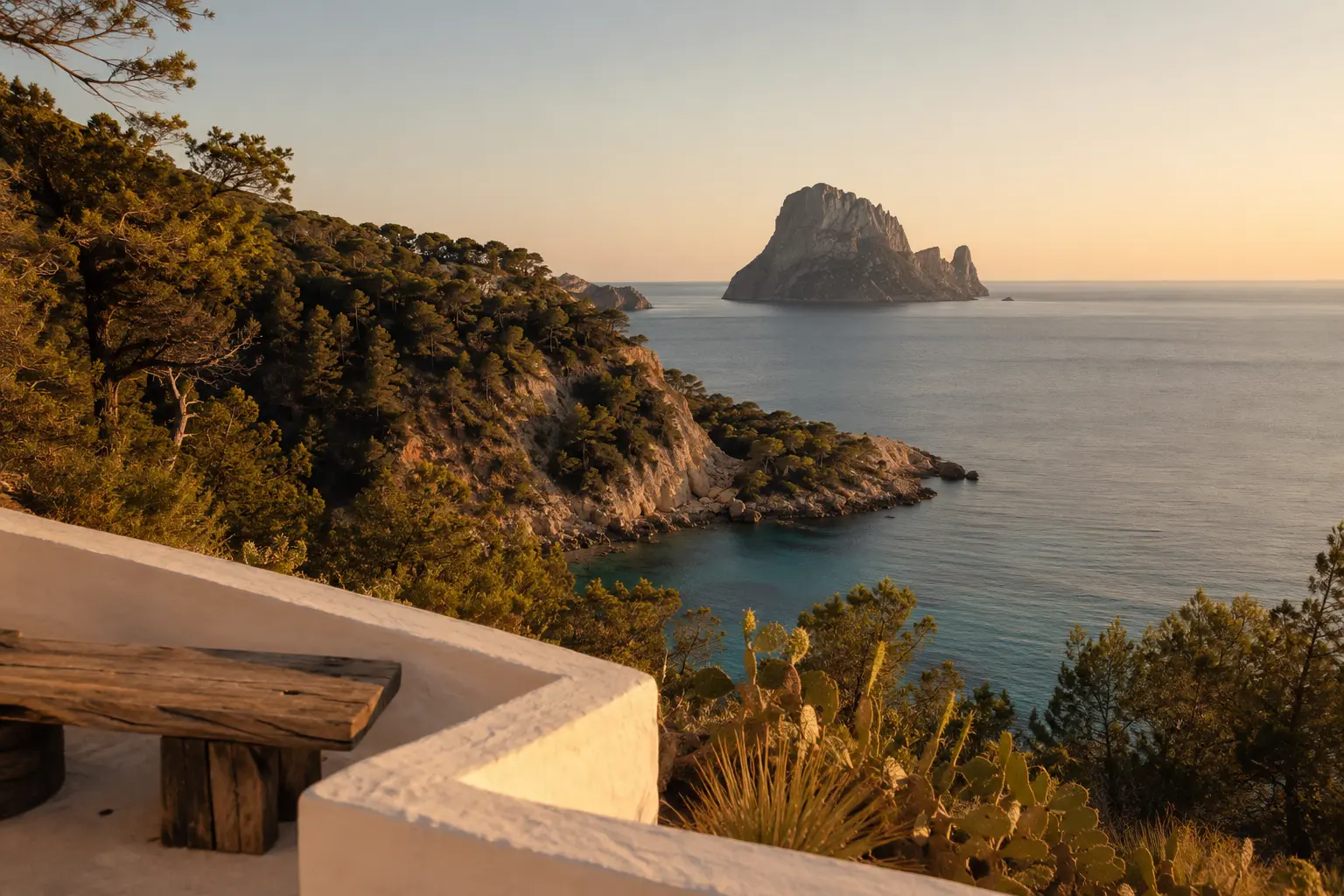

You have probably been to Ibiza. You have probably not looked at it as a place to own something, which is a completely different exercise — because the version of the island you meet in August is the version designed for people who leave after ten days.
This guide is written for the second exercise. Where the zones actually are and who each one suits, what property costs and why, what the island offers when the clubs are closed, when to come, and how hard it really is to get here in February. Prices, flight counts and distances all carry their source and date, so you can check them rather than take them on faith.
Ibiza is expensive and structurally supply-constrained. Houses ask around 8,843 €/m² and apartments 6,729 €/m² (Engel & Völkers, 23 June 2026), against a Spanish national average of 2,517 €/m² (Idealista). Across the Balearics as a whole, the average transaction price hit 4,173 €/m² in Q1 2026, up 10.3% year on year (API Baleares / Idealista, Q1 2026). Ibiza sits comfortably above that. A typical island transaction is around 1.1 M€ — roughly five times the Spanish average.
Geographically it is simple. The southwest coast (Sant Josep, Es Cubells, Cala Jondal, Cap Martinet) is where the trophy villas and the highest prices are. The centre (Santa Gertrudis, Sant Rafel) is the balanced option: village life, restaurants, and the shortest drive to the airport. The north (Sant Joan, Santa Agnès, Sant Miquel) is the quiet, rural, cheaper half. Ibiza Town gives you a walkable city and a UNESCO-listed old quarter. Santa Eulària is the family town with actual year-round services.
Ibiza is 572 km² — smaller than the Isle of Wight, larger than Malta. That scale matters more than any other single fact when you buy here: the island is small enough that you are never structurally cut off from the airport, the hospital or a good restaurant, so "remote" on Ibiza means fifteen extra minutes of driving, not a change of lifestyle. The airport sits in the flat southern plain next to the Ses Salines salt pans; almost everything else radiates north from it.
Five zones cover almost every serious buying decision on the island.
Dalt Vila, the fortified upper town of Eivissa, has been a UNESCO World Heritage Site since 1999 under the listing "Ibiza, Biodiversity and Culture" — a designation that covers not only the Renaissance walls but the Posidonia seagrass meadows offshore and the Phoenician site at Sa Caleta. It is the reason the water here is the colour it is: Posidonia filters it.
On the natural side, the Ses Salines natural park in the south protects the salt pans, the dunes and the channel across to Formentera. Es Vedrà, the limestone islet off the southwest coast, is the island's visual signature. The north holds the coves worth the drive — Benirràs, Cala Xarraca, Cala d'en Serra.
The food scene has grown up considerably. Three Ibiza restaurants hold a Michelin star in the 2026 guide: La Gaia at the Ibiza Gran Hotel under chef Óscar Molina, Omakase by Walt in Ibiza Town, and Unic in Sant Josep. That is down from five in the previous edition — Es Tragón and Etxeko by Martín Berasategui both lost the distinction because they were not operating when the guide was compiled, with Es Tragón relocating (Guía Michelin 2026, vía Diario de Ibiza, noviembre 2025). Two of the three are within fifteen minutes of Ibiza Town, which is a mild but real argument for buying in the east half of the island.
And then the markets: Las Dalias in Sant Carles on Saturdays, Punta Arabí in Es Canar on Wednesdays. Both survive from the island's 1970s counterculture and both are now firmly part of its commercial calendar.
Three broad categories, with very different price behaviour.
Here is the structural problem for anyone shopping the middle of that range. Ibiza's supply is capped by planning restrictions and by the simple fact that the island is 572 km². Prices have risen accordingly — Balearic transaction prices were up 10.3% year on year in Q1 2026. If your honest usage is six or eight weeks a year, spending 3 M€ to leave a villa empty for ten months is a poor allocation of capital, and the market gives you no discount for the empty months.
That is the gap co-ownership is built for, and it is the reason VIVLA operates on the island at all. More on the mechanics further down.
Ibiza's calendar is unusually sharp for a Mediterranean island. Understanding it is half of understanding the property market.
Season openings and closings at the major clubs bracket roughly May to October, and the island's biggest cultural fixture, Sant Joan's midsummer, falls on 23–24 June. The practical implication for buyers: viewing trips in the shoulder season give you access to agents and vendors who are unreachable in August.
Nowhere on Ibiza is far from Ibiza Airport (IBZ). Approximate drive times, no traffic (Rome2Rio, 2026):
Air connectivity is the part that surprises people, because it is two different airports depending on the month. In summer, IBZ serves around 87 non-stop destinations across 19 countries with roughly 40 airlines, at about 1,120 flights a week (FlightConnections / FlightsFrom, July 2026). Ryanair alone runs around 122 weekly departures. Busiest routes are Palma, Barcelona and Madrid; the biggest international ones are Amsterdam and Paris-Orly.
In winter the schedule contracts hard, to the year-round Spanish links — Madrid, Barcelona, Palma — plus a small number of European city routes. Plan an off-season trip around a connection through Madrid or Barcelona rather than assuming a direct flight. There are no scheduled long-haul services from the Americas, Asia or Oceania; the only intercontinental route is a seasonal one to Tel Aviv. Ferries from Dénia, Valencia and Barcelona run year-round and are the practical option if you are bringing a car.
If you have read this far, the arithmetic is probably already bothering you. A villa that works on this island costs several million euros, and you are going to use it for six weeks a year.
VIVLA exists to close that gap. Each property is set up as its own company, with Garrigues as legal partner, and divided into eight shares. What you acquire is an equity stake plus a shareholder loan, and the usage rights attached to it — not a timeshare, not a use licence, and not a booking. Entry into the portfolio starts from around 135.000 €. A share of a home valued at roughly 800.000 € sits around 150.000 €. Purchase, legal structure, maintenance and the scheduling calendar are handled for you, and there is an annual management fee covering the running of the house. When you sell your share, no new deed is issued.
VIVLA in Ibiza
Real homes with real title deeds, on one of the tightest property markets in the Mediterranean. Every share is one eighth, carrying six weeks a year.
→ Swipe to explore
 Sant Josep · Cala Tarida
Casa Tarida
190.000 € · 1/8 share
View home→
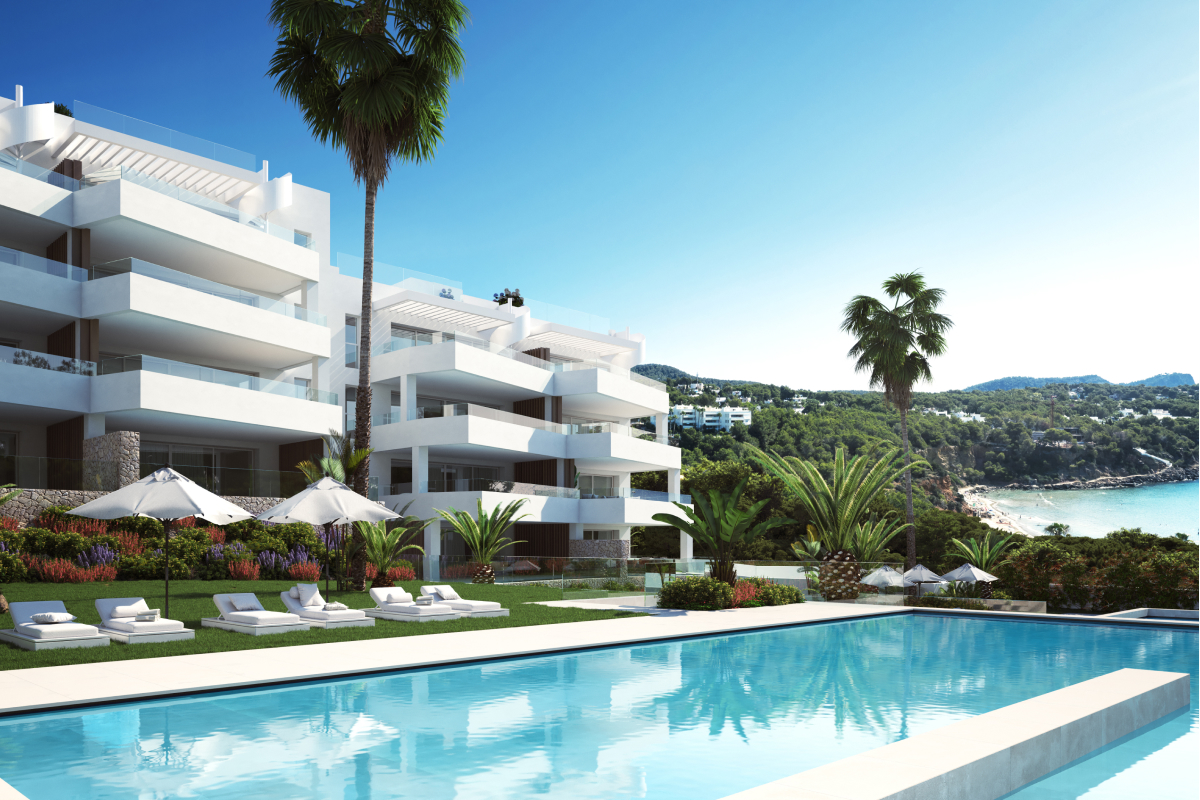 Under construction
Santa Eulària · Cala Llenya
Under construction
Santa Eulària · Cala Llenya
Casa Luma
315.000 € · 1/8 share
View home→
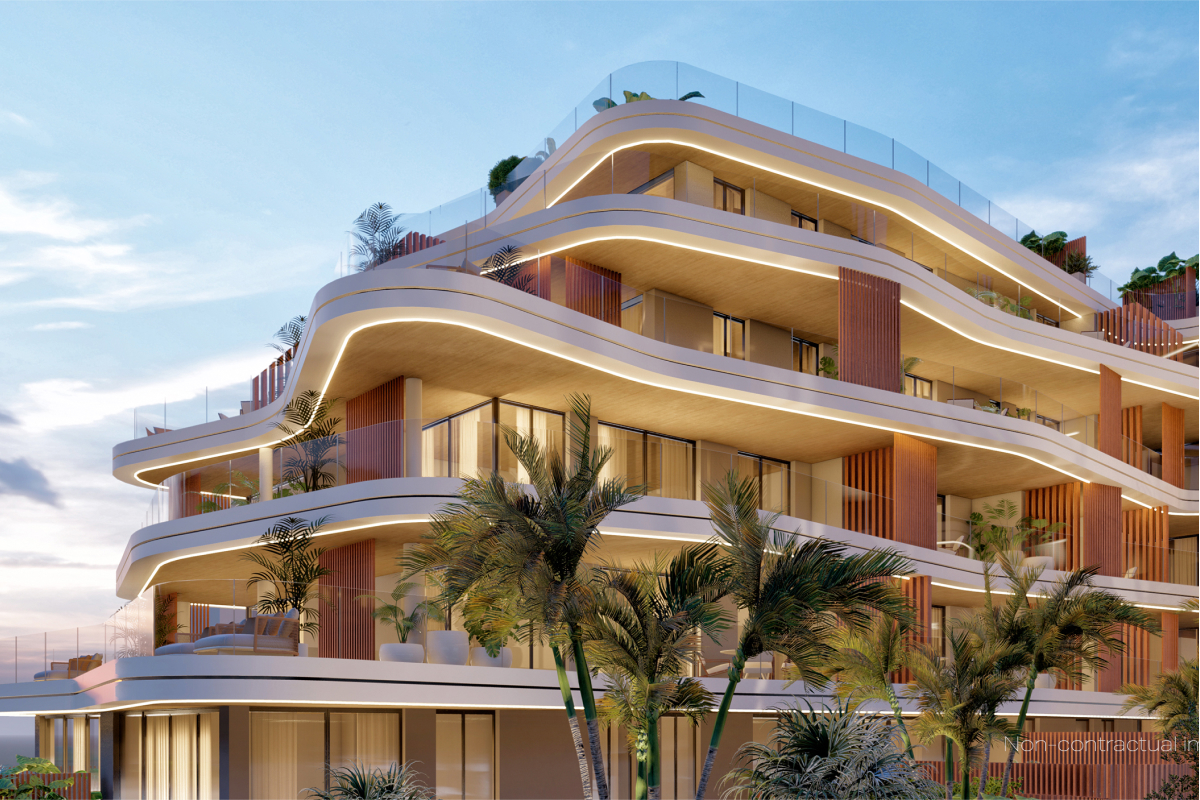 Under construction
Santa Eulària des Riu
Under construction
Santa Eulària des Riu
Casa Wave Seaside
260.000 € · 1/8 share
View home→
 Sant Josep · Cala Tarida
Casa Tarida II
180.000 € · 1/8 share
View home→
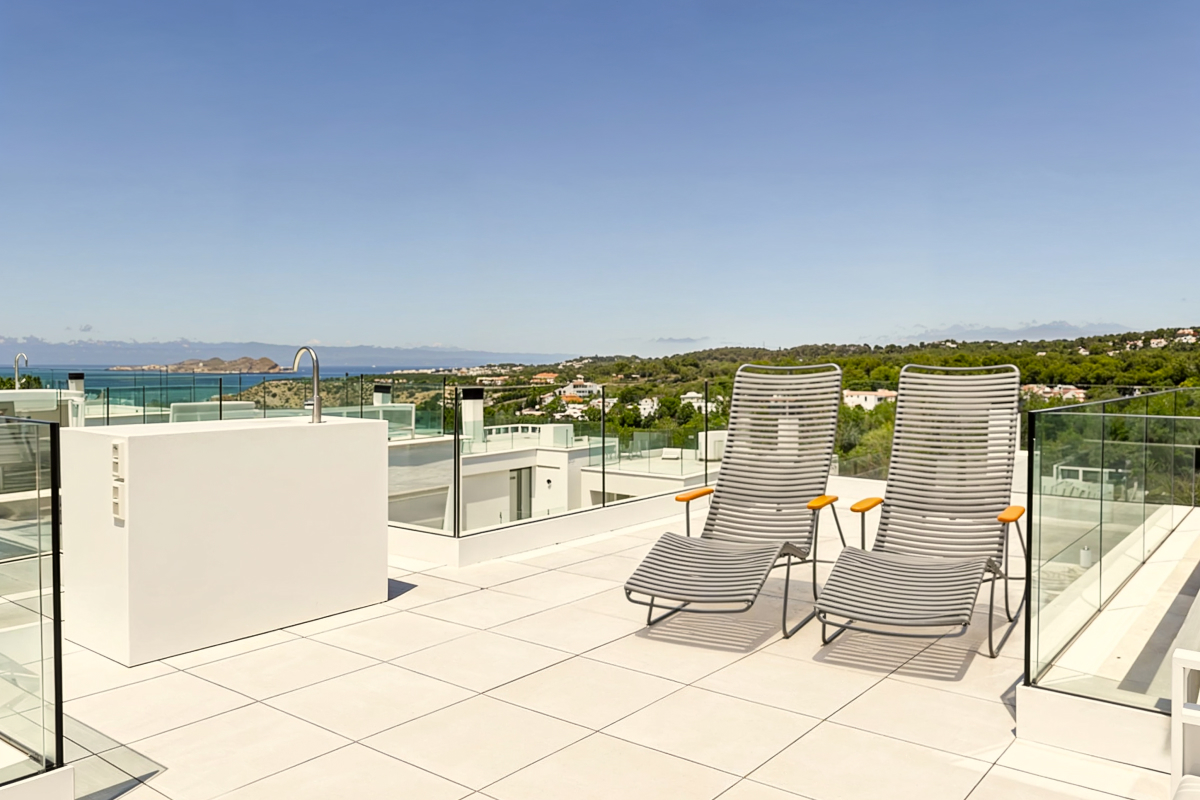 Sant Josep · Cala Tarida
Casa Tarida III
170.000 € · 1/8 share
View home→
Shares shown are 1/8, each carrying 6 weeks a year. Prices as published on each home’s page on 21 July 2026 and subject to change — check the listing for current availability.
Is Ibiza a good place to buy property?
Ibiza is one of the tightest and most expensive residential markets in the Mediterranean. Houses ask around 8.843 €/m² and apartments around 6.729 €/m² (Engel & Völkers, June 2026) — roughly three times the Spanish national average of 2.517 €/m² (Idealista). Buildable land is capped by planning rules and the island is small, so supply does not expand easily. That has supported prices, but it also means high entry tickets and thinner liquidity than the mainland. It suits buyers with a long horizon who will genuinely use the house.
How much does a villa in Ibiza cost?
A four-to-six-bedroom villa with a pool and sea views in the southwest typically lists between 3 M€ and 10 M€. Prime coastal plots achieve 10.000–20.000 €/m², with ultra-prime builds going beyond that. Inland and northern villages are materially cheaper. The typical island transaction is around 1,1 M€, about five times the Spanish national average.
Which area of Ibiza is best to live in?
It depends how much noise you want. Santa Gertrudis and the central interior are the safest all-round choice — villages, restaurants, 18 minutes to the airport. Santa Eulària suits families wanting a town with year-round services. Sant Josep and the southwest hold the highest-value villas and the best sunsets, at the highest prices. Sant Joan in the north is the quietest and the furthest out, at 35–40 minutes. Ibiza Town works if you want walkable city life and Dalt Vila on your doorstep.
Are there direct flights to Ibiza?
In summer, heavily so: around 87 non-stop destinations across 19 countries with about 40 airlines, roughly 1.120 flights a week at peak (FlightConnections / FlightsFrom, July 2026). Ryanair, easyJet, Vueling, Iberia and Jet2 carry most of it. Winter is a different airport — the schedule contracts to Madrid, Barcelona and Palma plus a handful of European routes. There are no direct long-haul services from the Americas or Asia; those connect through Madrid or Barcelona.
Can I co-own a home in Ibiza?
Yes. VIVLA structures each property as its own company, divided into eight shares, with Garrigues as legal partner. You acquire an equity stake plus a shareholder loan and the usage rights that come with it, rather than the whole villa. Entry starts from around 135.000 €, and a share of a home valued at roughly 800.000 € sits around 150.000 €. Management, maintenance and scheduling are handled for you, and shares can be resold without a new deed.
This guide is general information about the Ibiza property market and the VIVLA co-ownership model. It is not legal, tax or investment advice. Prices, flight schedules and market data carry the date of the source cited and change over time. Before acquiring any property or share, take independent legal and tax advice for your own circumstances and jurisdiction of residence.