 Explore blog articles

20 July 2026 – vivla
Formentera: The Island You Almost Can't Buy Into
The smallest and most protected of the Balearics: turquoise water, white sand, barely any cars and no airport. Strict planning keeps supply fiercely scarce — which is exactly why what exists here is so rare, and why co-ownership started on this island.

A ferry port at La Savina, a whitewashed capital at Sant Francesc, the low-key buzz of Es Pujols, and a coastline of famous beaches: Ses Illetes to the north, the long stretch of Migjorn along the south, Cala Saona to the west. Formentera is small enough to know in a couple of days. Buying here is another matter — and that is the whole story of this guide.
Key takeaways
- Scarcity is the defining feature. Strict planning protection means very little stock, and whole homes rarely change hands.
- No airport. Fly to Ibiza (IBZ), then a ferry of around 30 minutes from Ibiza town to La Savina.
- Four distinct zones: La Savina and Es Pujols for arrival and life, Sant Francesc for the everyday, Es Cap de Barbaria for silence, Migjorn for the barefoot rhythm.
- A sharp season. June to September is peak; May and October are the sweet spot; winter is very quiet.
- This is where VIVLA started. The first fractional sale in Spain was a Cala Saona villa valued at 2,5 M€, sold in 1/8 shares at 345.000 € each, taxes included (Idealista, 22 July 2022).
TL;DR — Formentera for buyers in 60 seconds
Everything arrives through La Savina. Sant Francesc, in the centre, is where residents actually live and shop. Es Pujols is the closest the island gets to a scene, which still means beach bars and an early night by Ibiza standards. Es Cap de Barbaria and the interior are near-empty; the Migjorn coast is where the days dissolve into swimming and long lunches.
Property is the hard part. Planning rules guard supply, so what exists is a handful of discreet traditional houses and a small number of low-profile seafront villas that rarely appear on the market. Owning a whole home here is out of reach for most buyers; owning a titled eighth is not. Casa Saona — VIVLA's first home, 900 m from Cala Saona — is fully sold, so the closest active shares today are in Ibiza, half an hour away by ferry (VIVLA listings, 20 July 2026).
Map & highlights
About 19 km end to end and never more than a few kilometres wide. There is no airport and barely any traffic; most visitors move by bike, scooter or boat. Everything below sits within 20 minutes of the ferry port at La Savina.
Coastline: Natural Earth 1:10m (public domain). Place coordinates: WGS84. Zone names are descriptive, not administrative. Casa Saona location from its listing page, 20 July 2026.
The main areas — vibe & highlights
Four stretches of a very small island, each with a different reason to be there.
La Savina & Es Pujols
La Savina is where you arrive: the port, the marina and the gateway to everything, with bike and boat rental right off the ferry. A short hop away, Es Pujols is the island's most animated spot — beach bars, restaurants and a gentle summer buzz that still feels a world away from Ibiza's intensity. A good base for first-timers who want a bit of life within walking distance.
Sant Francesc
The small, whitewashed capital: a church square, a handful of boutiques and galleries, and the everyday heart of local life. It is where residents actually shop and gather, which gives it a lived-in feel the beach spots lack. Central and calm, it is the natural choice if you want to be equidistant from both coasts and close to year-round services.
Es Cap de Barbaria & the interior
The wild, remote southern end: a famous lighthouse at the edge of the cliffs, big skies and near-total quiet. This is Formentera at its most elemental, with dark stars at night and almost no development. For buyers who want isolation above all, the cap and the interior deliver a version of the island most day-trippers never see.
The Migjorn coast
The long southern shoreline — a string of open beaches and low-key beach restaurants strung along the water. It is the island's relaxed centre of gravity, where days revolve around swimming, walking the sand and a long lunch with your feet almost in the sea. Less a village than a stretch of coast that defines the rhythm Formentera is loved for.
The beaches, the nature & the car-free rhythm
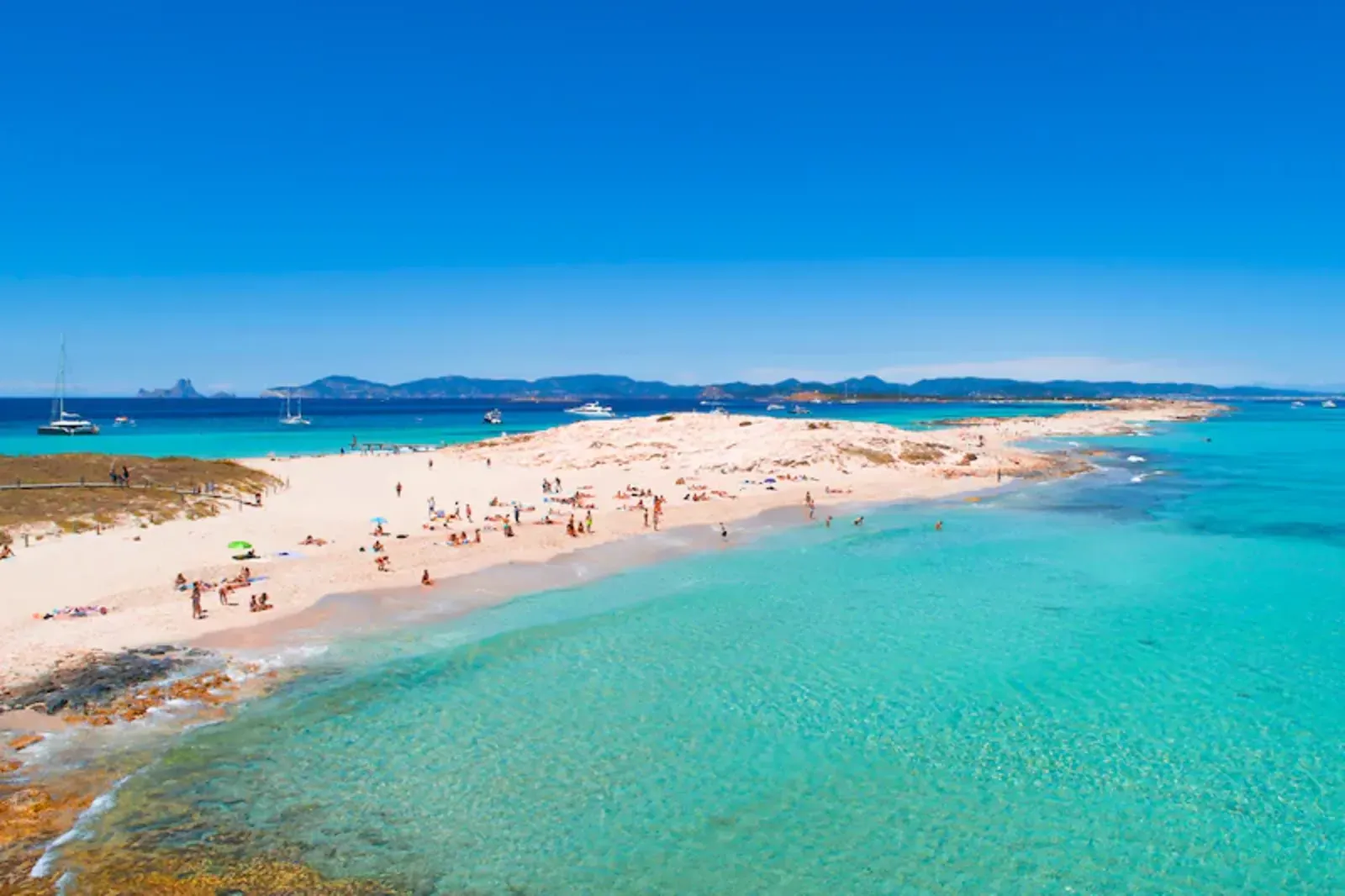
Formentera's beaches are its legend. Ses Illetes is regularly ranked among the best in the world — pale sand, impossibly clear water, part of the Ses Salines Natural Park it shares with Ibiza. Migjorn and Cala Saona are barely a step behind. The island's culture is bike-and-boat: many visitors get around on two wheels, and the pace is deliberately, gloriously slow.
Development is tightly controlled, which is precisely why the water stays that colour and the island stays this quiet. It is a place that has actively protected itself, and that protection is the entire reason it still feels the way it does. Spend a few days here and the unhurried, low-profile rhythm is the thing you take home.
What kind of property to expect — and why co-ownership fits
- Very little of it. That is the headline. Strict planning protection means supply is guarded fiercely, and homes rarely change hands.
- Discreet traditional houses. Low, whitewashed, often inland or set back from the coast, built to disappear into the landscape rather than announce themselves.
- A handful of low-profile seafront villas. Rare, tightly held, and priced accordingly when they do appear.
- Scarcity as the whole story. It is what keeps the island beautiful and what makes ownership genuinely premium — the two are the same fact seen from different sides.
Which is why co-ownership makes more sense here than almost anywhere. Buying a whole home in Formentera is out of reach for most buyers; a titled 1/8 share is real and achievable. There is history behind that too: the first fractional sale in Spain was a villa near Cala Saona valued at 2,5 M€ and sold in eighths at 345.000 € each, taxes included (Idealista, 22 July 2022). That house — Casa Saona, 3 bedrooms, 4 bathrooms, 200 m², 900 m from the beach — is where the model began, and it is now fully owned (VIVLA listing, 20 July 2026).
Best time to go & getting there
The logistics are the defining feature: Formentera has no airport. You fly to Ibiza (IBZ) and take the ferry from Ibiza town — roughly 30 minutes, with frequent sailings in season. It sounds like a hurdle; in practice it is a filter that keeps the island calm. It also makes Ibiza and Formentera a natural pair, and plenty of owners treat the two together.
VIVLA in Formentera
Where the model began.
Casa Saona was VIVLA's first co-owned home, and it is fully owned today — there are no shares available in Formentera right now. Join the waiting list for the island, or look at the two closest active homes, half an hour away by ferry in Ibiza.
 Sold out · Waiting list
Cala Saona · Formentera
Sold out · Waiting list
Cala Saona · Formentera
Casa Saona
Fully owned · join the waiting list
3 bed4 bath200 m²
View home → Ibiza · 30 min by ferry
Cala Tarida · Ibiza
Ibiza · 30 min by ferry
Cala Tarida · Ibiza
Casa Tarida
190.000 € · 1/8 share
3 bed2 bath186 m²
View home → Ibiza · 30 min by ferry
Cala Tarida · Ibiza
Ibiza · 30 min by ferry
Cala Tarida · Ibiza
Casa Tarida II
180.000 € · 1/8 share
3 bed2 bath100 m²
View home →Shares shown are 1/8, each carrying 6 weeks a year. Availability and prices as published on each home's page on 20 July 2026 and subject to change — check the listing for current availability.
Frequently asked questions
Can you actually buy property in Formentera?
Yes, but supply is extremely limited by strict planning protection, and whole homes rarely appear on the market. For most buyers the realistic route is co-ownership: a titled share of a house that already exists, rather than waiting for a rare whole-home listing.
How much does a home in Formentera cost?
Scarcity keeps it premium. As a documented reference point, VIVLA's first fractional sale in Spain was a villa near Cala Saona valued at 2,5 M€, divided into eighths at 345.000 € each, taxes included (Idealista, 22 July 2022). A share gets you island access for a fraction of the whole.
Is there an airport in Formentera?
No, and that absence is a large part of why the island stays quiet. You fly to Ibiza (IBZ) and cross by ferry from Ibiza town in roughly 30 minutes, with frequent sailings in season and a reduced timetable in winter.
Which beach is the best?
Ses Illetes is the most famous, regularly ranked among the best beaches in the world and protected inside the Ses Salines Natural Park. Migjorn — long, open and lined with low-key beach restaurants — and Cala Saona, on the west coast, are outstanding in their own right.
Can I co-own a home in Formentera with VIVLA?
Formentera is where VIVLA began, with Casa Saona near Cala Saona. That home is fully owned today and there are no shares available on the island right now, so the honest answer is: join the waiting list, or consider Ibiza, thirty minutes away by ferry, where shares are currently available. Current status on the Formentera page.
This guide is general information about the Formentera property market and the VIVLA co-ownership model. It is not legal, tax or investment advice. Prices, ferry schedules and availability carry the date of the source cited and change over time. Before acquiring any property or share, take independent legal and tax advice for your own circumstances and jurisdiction of residence.
vivla co-ownership
Real ownership, a fraction of the cost
VIVLA offers managed co-ownership of luxury second homes across Spain — Mallorca, Ibiza, Menorca, Baqueira and many more. You own a registered share with a real title deed, not a use right, and VIVLA handles the purchase, the legal structure and year-round maintenance. It's the rational choice when you'll use the house a few weeks a year rather than the whole season.